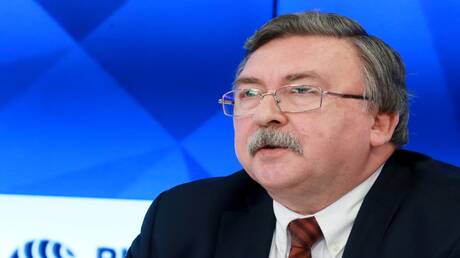
In a striking statement, Russia's permanent representative to international organizations in Vienna, Mikhail Ulyanov, asserted that the United States has not yet understood that Iran "does not accept ultimatums." These comments come at a sensitive time when relations between major powers and Iran are increasingly strained, especially against the backdrop of political and economic crises facing Tehran.
Ulyanov's remarks serve as a warning to the United States against continuing its policy of ultimatums, which could exacerbate the situation rather than improve it. Representing his country in international forums, Ulyanov seeks to highlight the need to understand the political complexities surrounding Iran.
Details of the Situation
Ulyanov's statements come as pressures on Iran from the United States and its allies are mounting, with attempts to impose new sanctions. These pressures have led to heightened tensions in the region, as Iran refuses to respond to Washington's demands, complicating the political landscape further.
Moreover, the Russian statements reflect Moscow's supportive stance towards Tehran in the face of Western pressures. Russia and Iran are considered allies on many regional issues, making it essential for Moscow to defend Tehran's position on the international stage.
Background & Context
Historically, relations between Iran and the United States have been tense since the Islamic Revolution in 1979. Since then, Washington has imposed successive economic sanctions on Tehran, significantly impacting the Iranian economy. In recent years, the United States has sought to reimpose new sanctions following its withdrawal from the nuclear agreement in 2018, escalating tensions further.
In response, Iran is striving to enhance its nuclear and economic capabilities, which the West views as a threat to regional and international security. This dynamic complicates the pursuit of diplomatic solutions, as fears of escalating conflict continue to grow.
Impact & Consequences
Ulyanov's remarks could further escalate tensions between the United States and Iran, reflecting Washington's unwillingness to alter its policy towards Tehran. This situation could lead to potential military escalation, especially with the presence of other regional powers like Israel, which views Iran as a direct threat.
Furthermore, the continuation of these tensions may impact global oil markets, as any escalation in the region could lead to rising oil prices, affecting the global economy. Neighboring countries to Iran would also be directly affected by any potential escalation, increasing instability in the region.
Regional Significance
The Iranian-American relations are a sensitive topic for Arab countries, as any escalation could impact security and stability in the region. Gulf states, in particular, are closely monitoring the situation, as any military escalation could have negative repercussions on their security.
Additionally, the ongoing tensions could enhance Iran's role in the region, potentially increasing its influence in Iraq, Syria, and Lebanon, which many Arab countries perceive as a direct threat to their national security.
In conclusion, Ulyanov's statements serve as a reminder that international relations are complex, and understanding the political dynamics is crucial for achieving effective diplomatic solutions. Given the current circumstances, there remains hope that the involved parties can find ways to communicate and understand each other.