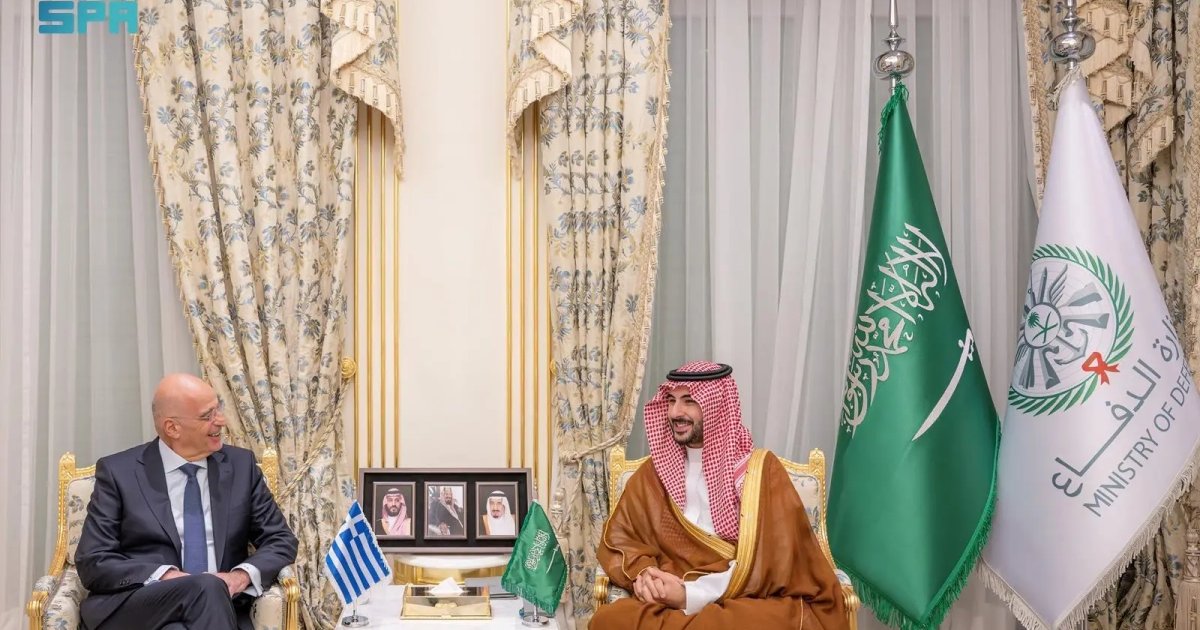
Saudi Defense Minister Prince Khalid bin Salman held a meeting with Greek National Defense Minister Nikos Dendias in the capital Riyadh on Wednesday. During the meeting, recent developments in the region were discussed, particularly the ongoing Iranian attacks on the Kingdom and several other countries, and the impact of these attacks on global security and peace.
The talks also addressed ways to enhance military and defense cooperation between the two countries, within the framework of the growing bilateral relations between Saudi Arabia and Greece. Both sides expressed significant interest in exchanging military expertise and technologies, reflecting their mutual commitment to regional and international security.
Details of the Meeting
The meeting between Prince Khalid bin Salman and Nikos Dendias comes at a time when the Middle East is witnessing heightened tensions due to Iranian activities, which are considered a threat to regional security. Recent Iranian attacks targeting the Kingdom and other countries have raised widespread international concern, prompting many nations to reassess their defense strategies.
During the meeting, the security challenges facing the region were also reviewed, including threats from armed groups and ongoing conflicts. Both sides emphasized the importance of coordination among friendly nations to effectively confront these challenges.
Background & Context
Historically, the relations between Saudi Arabia and Greece have seen significant development in recent years, as both countries have sought to enhance cooperation in various fields, including defense. These discussions come as part of the Kingdom's efforts to strengthen its strategic partnerships with European countries, especially in light of increasing tensions with Iran.
Iran, considered a key player in regional politics, has ramped up its military activities in recent years, leading to heightened fears of new conflicts. These circumstances have prompted many countries to rethink their security strategies, reflecting the importance of cooperation among nations in addressing shared threats.
Impact & Consequences
The implications of Iranian attacks extend beyond regional borders, affecting global security and peace. Attacks targeting critical infrastructure in countries, such as oil facilities, threaten the stability of global markets and lead to rising oil prices, impacting the global economy.
Furthermore, strengthening military cooperation between Saudi Arabia and Greece could contribute to the formation of new alliances in the region, potentially leading to a shift in the balance of power. This cooperation could have far-reaching effects on regional stability and enhance the ability of nations to confront common threats.
Regional Significance
Given the regional context, enhancing cooperation between Saudi Arabia and Greece could open new avenues for other Arab countries. Military and defense cooperation can be seen as a model to emulate in addressing common security challenges, especially amid rising Iranian activities.
The stability of the Arab region heavily relies on the ability of nations to collaborate and coordinate in facing threats, which requires effective strategies and strong partnerships. These discussions reflect the growing awareness of the importance of collective action in enhancing regional security.