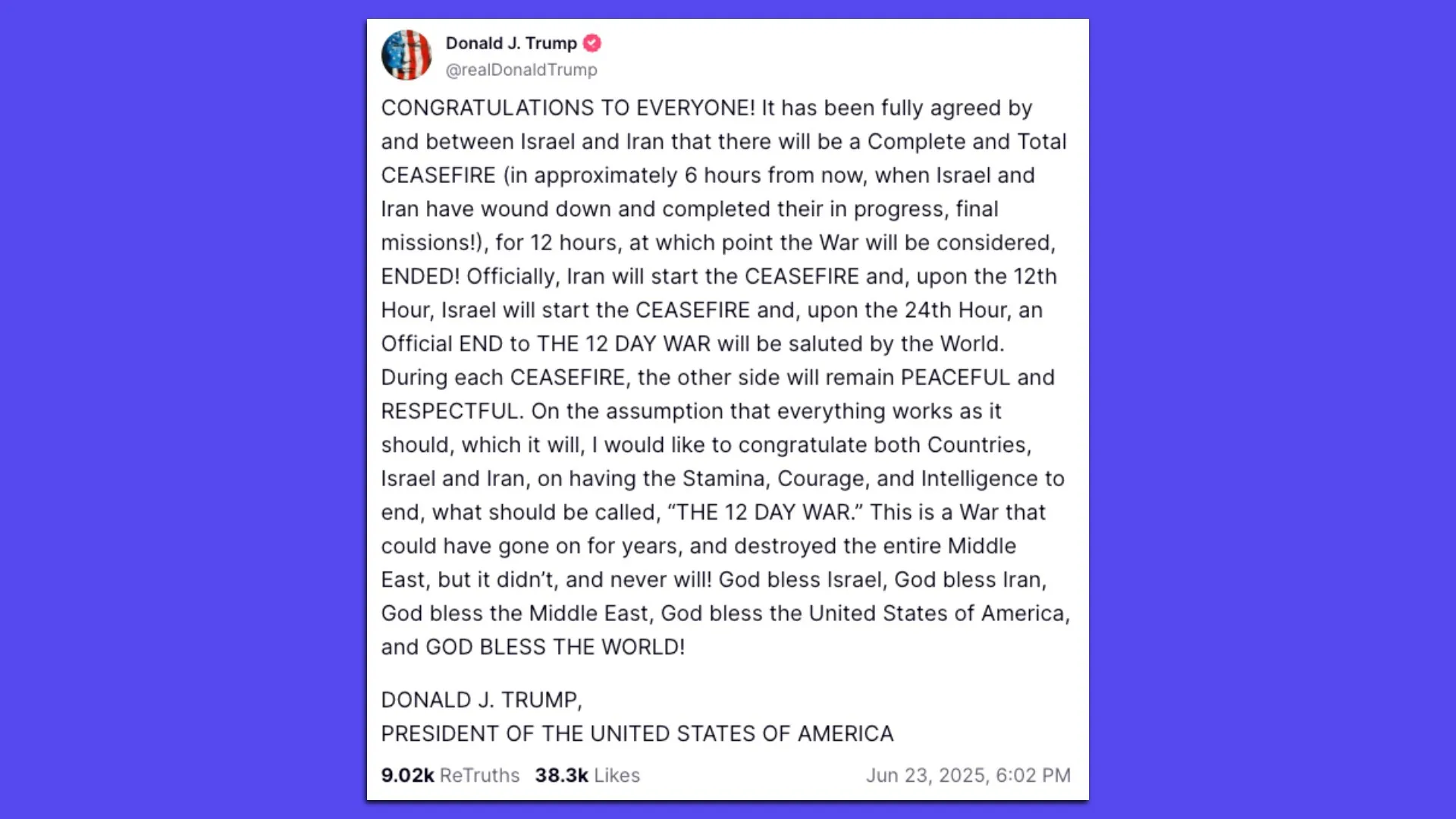
Informed sources have revealed that the administration of former President Donald Trump proposed a temporary ceasefire between Iran and its adversaries, amid escalating American threats against Tehran. This step is part of Washington's efforts to limit military escalation in the region, aiming to ease tensions that could lead to open conflict.
The proposal appears to have emerged at a time when Trump was threatening Iran with new sanctions, raising questions about the contradiction between calls for peace and increasing threats. This invitation has been directed towards Pakistan to act as a mediator, given its historical relations with both parties.
Details of the Proposal
The Trump administration seeks to utilize Pakistan as a mediator due to its complex relationships with Iran, as Islamabad is considered one of the few countries capable of playing a positive role in this context. As tensions rise between the United States and Iran, it seems Washington is looking for any opportunity to de-escalate the conflict.
This proposal comes at a sensitive time, as the region is witnessing an escalation in military operations, increasing the likelihood of an all-out conflict. Reports indicate that Trump was aiming to expand pressure on Iran while simultaneously attempting to open channels for dialogue.
Background & Context
Historically, relations between the United States and Iran have been tense since the Islamic Revolution in 1979, experiencing numerous fluctuations. In recent years, tensions have notably escalated due to Iran's nuclear program and military activities in the region.
Pakistan, regarded as a key player in regional politics, has a history of complex relations with Iran. Islamabad has previously attempted to mediate in regional disputes, making it a suitable candidate for this role. However, the success of these efforts depends on the willingness of the involved parties to sit at the negotiation table.
Impact & Consequences
If mediation efforts succeed, it could lead to a reduction in tensions in the region, positively impacting regional security. However, the failure of these attempts may escalate the conflict, threatening the stability of regional countries and increasing the likelihood of new conflicts.
These developments are also significant for American policies in the Middle East, as Washington seeks to maintain its influence in the region. Any progress in this direction could strengthen the U.S. administration's position and provide an opportunity to negotiate from a position of strength.
Regional Significance
The implications of this proposal extend beyond just the immediate parties involved. A successful mediation could reshape the dynamics of power in the region, potentially leading to a more stable environment. Conversely, failure could exacerbate existing tensions and lead to broader conflicts.
In conclusion, the situation remains fluid, and the international community will be closely monitoring the developments surrounding this proposal. The outcome will not only affect U.S.-Iran relations but also have lasting impacts on regional stability.