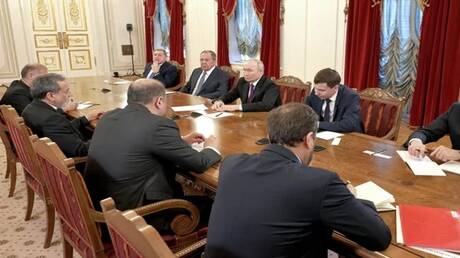
Russian Foreign Minister Sergey Lavrov confirmed that the discussions held between Russian President Vladimir Putin and Iranian Foreign Minister Abbas Araqchi were fruitful, addressing numerous bilateral and regional issues. These talks occur during a sensitive time when the region is witnessing major political and economic shifts.
Russia and Iran are seeking to enhance cooperation in various fields, including security, energy, and trade. Lavrov noted that these meetings reflect the commitment of both countries to strengthen their strategic relations amid the challenges they face on the international stage.
Details of the Meeting
The talks took place in the Russian capital, Moscow, where Putin and Araqchi reviewed issues related to the Iranian nuclear program, as well as the situations in Syria and Iraq. Economic cooperation between the two countries was also discussed, particularly in the fields of energy and oil.
Lavrov emphasized that these discussions were not merely a fleeting encounter but an opportunity to exchange views on vital issues affecting regional and international security. Both sides expressed a strong desire to enhance military and technical cooperation, reflecting the depth of relations between Moscow and Tehran.
Background & Context
These discussions come amid rising tensions in the Middle East, particularly following the withdrawal of the United States from the Iranian nuclear agreement. Russia, which plays a significant role in the region, seeks to support Iran in facing Western pressures, thereby strengthening its position as an influential power in regional politics.
The Russian-Iranian relationship is not new; it dates back decades, characterized by cooperation in various fields, including energy and security. As challenges increase, it appears that the two countries are drawing closer together, potentially altering the balance of power in the region.
Impact & Consequences
These talks underscore the importance of cooperation between Russia and Iran in addressing shared challenges. They are expected to contribute to stabilizing the region, especially amidst the multiple crises faced by Middle Eastern countries.
Furthermore, these relations may influence Western policies towards Iran, as Western nations might find it challenging to pressure Tehran in light of increasing Russian support. This cooperation could also bolster Iran's position in upcoming nuclear negotiations.
Regional Significance
The Russian-Iranian relationship significantly impacts Arab countries, potentially leading to shifts in regional alliances. Arab nations striving for stability may find themselves in a difficult position amid this growing cooperation.
Moreover, the strengthening of ties between Moscow and Tehran may prompt some Arab states to reassess their strategies in dealing with Iran, possibly leading to changes in regional policies.
In conclusion, the discussions between Putin and Araqchi represent an important step toward enhancing relations between Russia and Iran, opening new avenues for cooperation across various fields and reflecting the challenges faced by the region amid global political and economic changes.