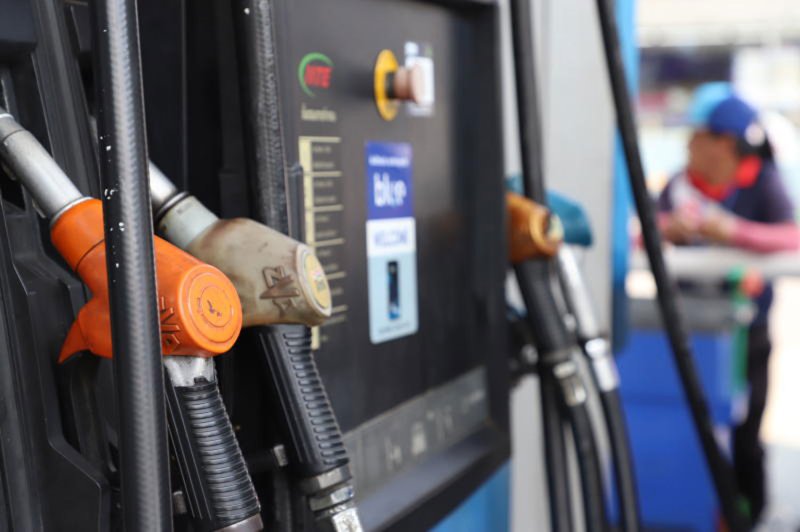
The Thai government announced its intention to reduce the excise tax on diesel by 1 baht per liter, in a move aimed at alleviating the increasing financial burdens on consumers. This measure is expected to cost the state approximately 2 billion baht monthly. This was stated by Deputy Prime Minister Vipat Ratchakitprakarn, who chaired a meeting of the Joint Administration and Monitoring Center regarding the situation in the Middle East.
Ratchakitprakarn confirmed that the government has approved this decision; however, its implementation requires the approval of the Election Commission, which will determine the timing of its application. He explained that the government seeks to take gradual steps, noting that previous governments had reduced taxes to zero, but the financial impact of this decision must be considered.
Details of the Announcement
Lavaron Sangsnit, the permanent secretary of the Ministry of Finance, reported that this reduction applies only to diesel, which is currently taxed between 5 to 6 baht per liter, depending on the type. He confirmed that this reduction will be temporary and that any future adjustments will depend on global oil prices, the fuel fund mechanism, and the financial situation of the state.
Sangsnit indicated that this measure could be implemented as soon as the tax administration completes its assessment and submits it to the Election Commission. He clarified that the goal of this reduction is to ease the suffering of citizens, especially amidst rising prices.
Background & Context
This step comes at a time when many countries are suffering from rising fuel prices due to global crises, including conflicts in the Middle East and fluctuations in energy markets. These crises have significantly impacted the Thai economy, prompting the government to take urgent measures to alleviate burdens on citizens.
Historically, Thailand has seen several attempts to reduce fuel taxes, but these attempts often faced financial challenges. However, the current government hopes to achieve a balance between providing support to citizens and maintaining the financial conditions of the state.
Impact & Consequences
This reduction is expected to positively impact consumers, as it will help reduce transportation and goods costs. However, the cost of this reduction to the government, estimated at around 2 billion baht monthly, may affect the public budget, necessitating the search for compensatory revenue sources.
The government is currently evaluating alternative revenue sources, such as increasing the value-added tax on imports, in an attempt to maintain overall financial objectives. Additionally, ongoing crises in the energy sector and conflicts in the Middle East may pose risks to the growth of the Thai economy in the coming years.
Regional Significance
This step is particularly significant for Arab countries facing similar challenges in energy markets. Rising fuel prices affect living costs and increase pressure on governments to provide support to citizens. Thailand's experience in reducing fuel taxes may serve as a model for some Arab countries seeking to alleviate burdens on their citizens.
In conclusion, this step reflects the Thai government's commitment to addressing the challenges of rising fuel prices and providing support to citizens amid difficult economic conditions. However, maintaining a balance between providing support and ensuring financial stability remains a significant challenge for the government.