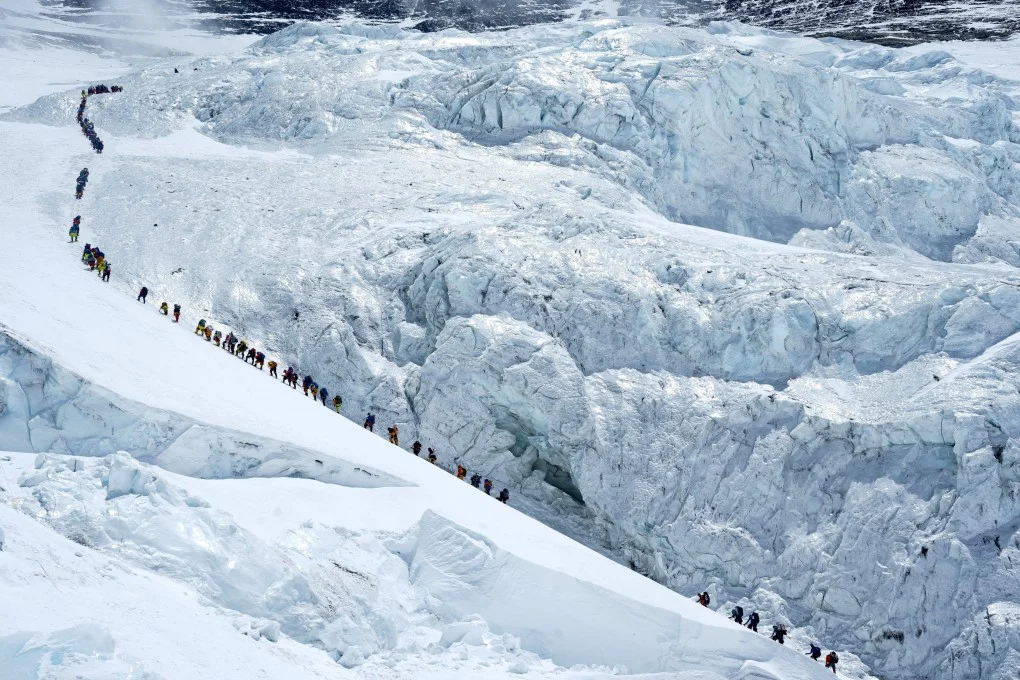
Two Indian climbers died on the summit of Everest during a record climbing season via the southern route in Nepal, where experts warned of the dangers of congestion on the world's highest peak. The climbers are Sandeep Arya, who reached the summit on Wednesday, and Arun Kumar Tiwari, who reached the top on Thursday. Nivesh Karki, the director of Pioneer Adventures, noted that the climbers faced health problems while descending from the summit.
This incident comes at a time when Mount Everest is witnessing a significant increase in the number of climbers, raising serious concerns about the safety of these adventurers. Karki indicated that they are working to recover the bodies of the climbers, reflecting the logistical challenges faced by rescue teams in such harsh conditions.
Details of the Incident
Sandeep Arya and Arun Kumar Tiwari died after encountering health difficulties while descending from the summit of Everest, highlighting the increasing risks associated with climbing under congested conditions. A record number of climbers has been registered this year, putting additional pressure on narrow paths and endangering the lives of climbers.
Mount Everest is a popular destination for climbers from around the world, attracting adventure enthusiasts from various nationalities. However, the rising number of climbers in recent years has led to tragic incidents, as climbers face significant challenges such as oxygen shortages, harsh weather conditions, and congestion.
Background & Context
Historically, Mount Everest has witnessed numerous tragic incidents, with many climbers losing their lives due to severe conditions. Since the mountain was opened for commercial climbing in the 1980s, Everest has become a primary destination for climbers, leading to a notable increase in the number of climbers each year.
Nepal is home to eight of the ten highest mountains in the world, making it a major hub for mountaineering. However, the increasing number of climbers has negatively impacted climber safety, as many suffer health issues due to physical and psychological stress.
Impact & Consequences
Recent incidents on Everest indicate an urgent need for stricter regulations and guidelines regarding mountain climbing. Experts have warned that congestion can lead to more tragic incidents if immediate action is not taken.
These incidents could impact the tourism industry in Nepal, where the local economy heavily relies on mountaineering revenues. If incidents continue, climbers may hesitate to visit the area, negatively affecting the local economy.
Regional Significance
Mountaineering is part of the adventure culture that is gaining popularity in the Arab world, with many young Arabs seeking to experience climbing. However, these climbers must be made aware of the risks associated with this sport, especially under the harsh conditions they may face.
These incidents can serve as an important lesson for Arab climbers, as they must take necessary precautions and plan adequately before embarking on their adventures. Such events can also encourage the promotion of a safety culture in mountaineering in the region.