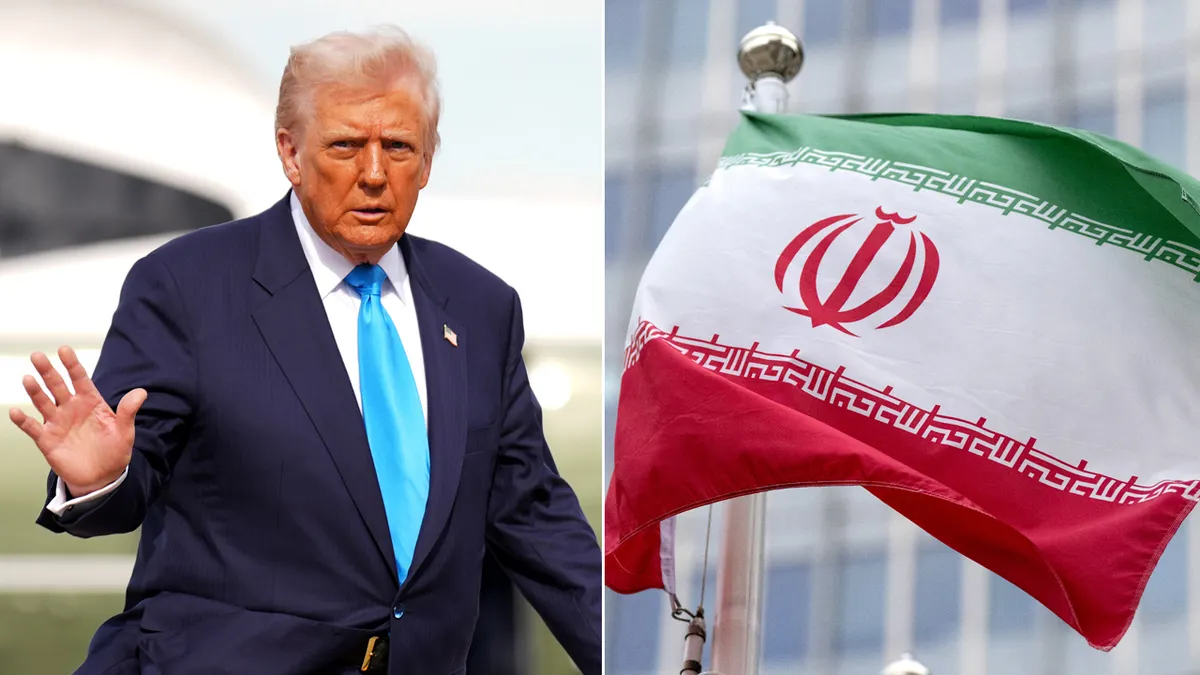
U.S. President Donald Trump stated that the cancellation of sending American negotiators to Pakistan does not mean that the United States is preparing to resume war with Iran. These remarks come at a time when relations between Washington and Tehran are increasingly strained.
During a press conference, Trump clarified that the decision was part of a reassessment of American strategies in the region, indicating that the United States does not seek to escalate the conflict with Iran but hopes to achieve peace and stability.
Details of the Event
Trump's statements follow a period of heightened tensions between the United States and Iran, with relations between the two countries deteriorating significantly since Washington's withdrawal from the nuclear agreement in 2018. This withdrawal triggered a series of economic sanctions imposed by the United States on Iran, exacerbating the situation in the region.
Despite the cancellation of negotiations, Trump affirmed that the United States remains open to dialogue with Iran and is seeking peaceful solutions to existing conflicts. He also noted that sending negotiators to Pakistan was part of broader efforts to strengthen relations with countries in the region.
Background & Context
Historically, U.S.-Iranian relations have experienced numerous fluctuations, with periods of cooperation and others marked by tension. Following the Islamic Revolution in 1979, diplomatic relations between the two countries were severed, leading to a series of crises that escalated military and political conflicts.
In recent years, there have been multiple attempts to rebuild relations, but economic sanctions and military tensions have hindered these efforts. The cancellation of negotiations with Pakistan may indicate a shift in U.S. strategy towards the region, as Washington seeks to reassess its priorities.
Impact & Consequences
These statements could affect U.S. relations with its allies in the region, as some countries may feel concerned about the ambiguity of American policy towards Iran. Additionally, the cancellation of negotiations could intensify tensions between the United States and Iran, potentially leading to military escalation.
Moreover, these developments may impact global markets, particularly in the oil and energy sectors, where Iran is a key player. Any escalation in the conflict could lead to rising oil prices and increased instability in the markets.
Regional Significance
For Arab countries, any escalation in the conflict between the United States and Iran could have direct implications for security and stability in the region. Many Arab nations view Iran as a threat to their national security, and thus any additional tensions could lead to heightened conflicts in the area.
At the same time, some Arab countries may seek to exploit these circumstances to strengthen their relations with the United States, potentially leading to changes in regional alliances.
In conclusion, developments in U.S.-Iranian relations remain a vital topic requiring close monitoring, as any changes could significantly impact security and stability in the Middle East.