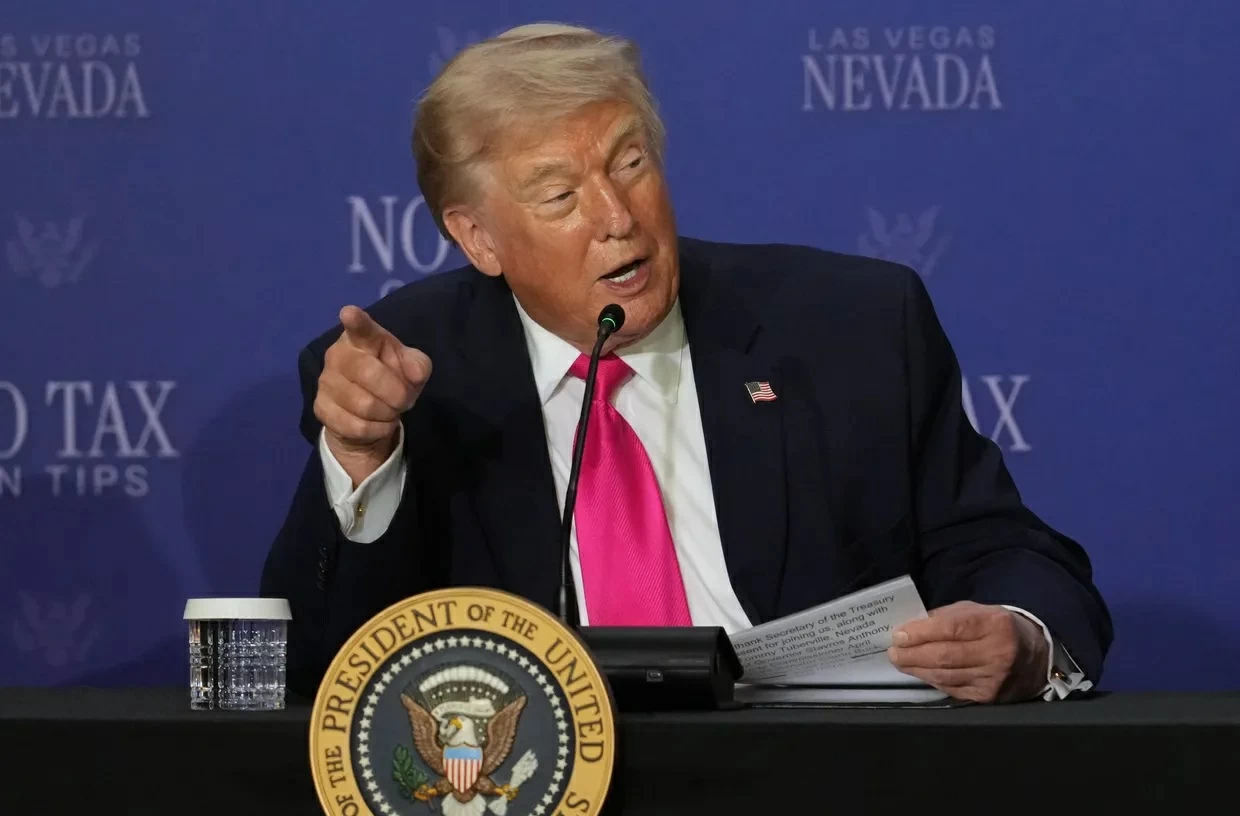
U.S. President Donald Trump has denied Iranian reports that claimed Washington agreed to lift sanctions imposed on Iran. In statements to the New York Post, Trump hinted at the possibility of military action if Tehran does not make concessions. Trump stated, "I am not open to making any concessions to Iran," adding, "Iran knows what will happen soon."
In a related context, CNBC reported an American official saying that reports indicating the United States agreed to lift oil sanctions on Iran are "false." Earlier, Tasnim News Agency reported that a source close to the Iranian negotiating team announced Washington's agreement to lift sanctions during negotiations.
Details of the Event
In light of these developments, Pakistan's Interior Minister Mohsin Naqvi left the Iranian capital Tehran after meeting with Iranian Foreign Minister Abbas Araghchi. The discussions between the two sides addressed common issues amid ongoing Pakistani diplomatic efforts in the region.
Pakistani diplomatic sources indicated that the Iranian response to American proposals to end the war could lead to a deadlock, raising concerns in Pakistan that this response would not contribute to improving the situation. The sources reported that this assessment aligns with the American perspective, as fears grow regarding the potential resumption of the American-Israeli war against Iran.
Background & Context
These statements come at a sensitive time when the region is witnessing increasing tensions, particularly following the escalation of conflicts in the Middle East. Relations between Iran and the United States have notably deteriorated since Washington's withdrawal from the Iranian nuclear deal in 2018, leading to the imposition of severe economic sanctions on Tehran.
As a neighboring country to Iran, Pakistan seeks to play a mediating role in this crisis, hoping to achieve stability in the region by proposing measures aimed at ending the conflict. However, Iranian responses to these proposals could complicate mediation efforts.
Impact & Consequences
The ongoing tensions between the United States and Iran could lead to serious repercussions for regional security. Increased military and economic pressures could push Iran to take escalatory steps, raising the likelihood of a large-scale conflict.
Moreover, these conditions could negatively affect the global economy, especially given the heavy reliance on Iranian oil in international markets. Any military escalation could lead to rising oil prices and increased instability in financial markets.
Regional Significance
For the Arab region, the escalation of tensions between Iran and the United States may deepen sectarian and political divisions. Arab countries cooperating with Washington may find themselves in a sensitive position, needing to balance their relations with Tehran.
Additionally, any military escalation could result in an influx of refugees and increased internal tensions in neighboring countries, exacerbating existing humanitarian crises. Therefore, mediation efforts by Pakistan and Qatar may be essential to promote stability in the region.
In conclusion, the situation in the Middle East remains complex, with overlapping international and regional interests, necessitating a sustainable diplomatic solution that ensures peace and security for all.