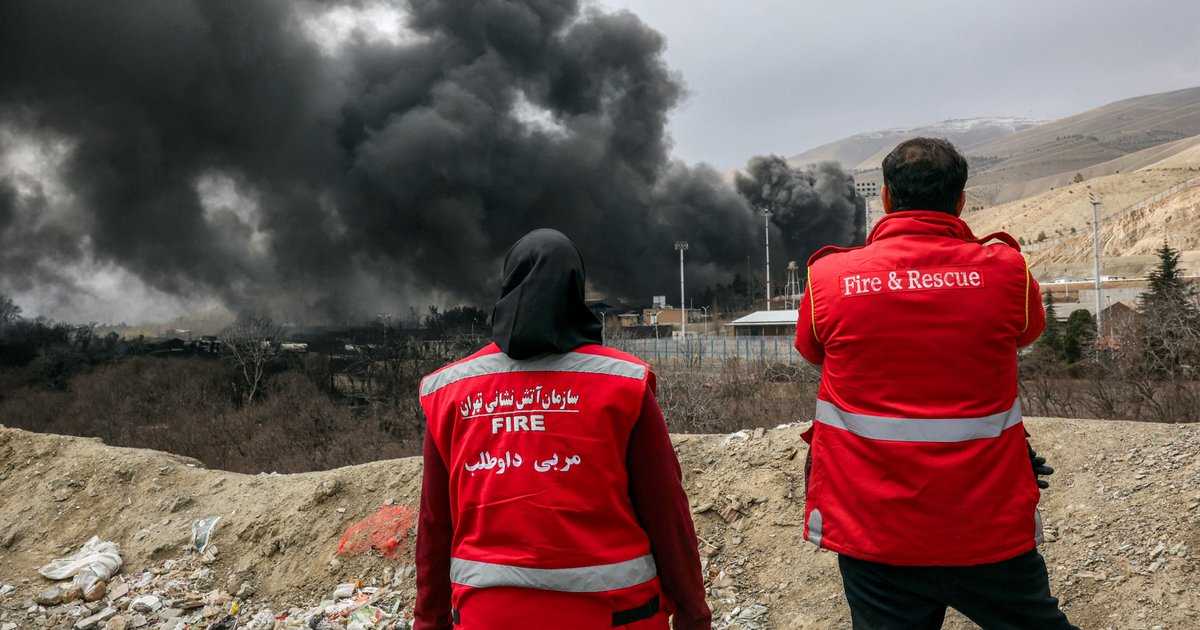
Amid escalating tensions between the United States and Iran, President Donald Trump has issued new threats to seize Iranian oil, stating, "If it were up to me, I would take the oil, I would keep the oil, and it would bring in a lot of money." These statements come at a time when Iran is facing American-Israeli attacks on its oil facilities, raising significant concerns about the future of its resources.
In response to Trump's remarks, Iranian officials emphasized that Iran is not Venezuela, declaring, "We make it clear to the Americans: this is not Venezuela, where you can plunder resources." These statements reflect Iran's determination to resist any attempts at plunder, drawing on its long history of resilience against external pressures.
Details of the Event
The American-Israeli attacks on Iran began two months ago, targeting vital oil facilities and escalating tensions in the region. Trump's threats to seize Iranian oil are part of his attempts to replicate the Venezuelan scenario, where the United States successfully overthrew President Nicolas Maduro and exploited the country's resources. However, the circumstances in Iran differ significantly from those in Venezuela, as Iran possesses superior military capabilities.
Historically, Iran experienced resource plundering following the overthrow of Prime Minister Mohammad Mossadegh in 1953, who nationalized the oil industry. This American plundering of resources in developing countries is not a new phenomenon; it is part of American imperial policies that date back to the post-World War II era.
Background & Context
The history of American resource plundering spans decades, as the United States has long exploited the wealth of developing nations. In the post-World War II period, Americans and European imperialists clung to their economic interests, refusing to grant economic sovereignty to countries that were under colonial rule. This was evident in the statements of former Ghanaian President Kwame Nkrumah, who noted that granting political independence to colonized nations did not change anything in their economic lives.
In 1955, colonized nations faced a collective challenge at the Bandung Conference, where the right to self-determination for nations and peoples was affirmed. This conference marked a turning point in confronting Western dominance over economic resources.
Impact & Consequences
Trump's statements underscore the continuation of American policies in plundering natural resources, raising questions about the future of American-Iranian relations. These policies could lead to heightened tensions in the region, as Iran has the capability to respond strongly to any aggressions. The persistence of these policies may exacerbate economic and social crises in targeted countries.
Moreover, these remarks reflect the ongoing approach of the United States in dealing with countries seeking to achieve economic sovereignty. History is replete with examples of how the United States has intervened in the affairs of other nations, raising concerns about the repetition of such scenarios in the future.
Regional Significance
These events hold particular importance for Arab countries, as any escalation in tensions between the United States and Iran could directly affect security and stability in the region. The struggle for natural resources remains one of the main factors influencing relations between nations, potentially leading to negative repercussions for Arab states.
In conclusion, Trump's statements reflect a long history of American resource plundering, prompting Arab nations to strengthen their economic sovereignty and work to protect their resources from any external interference.