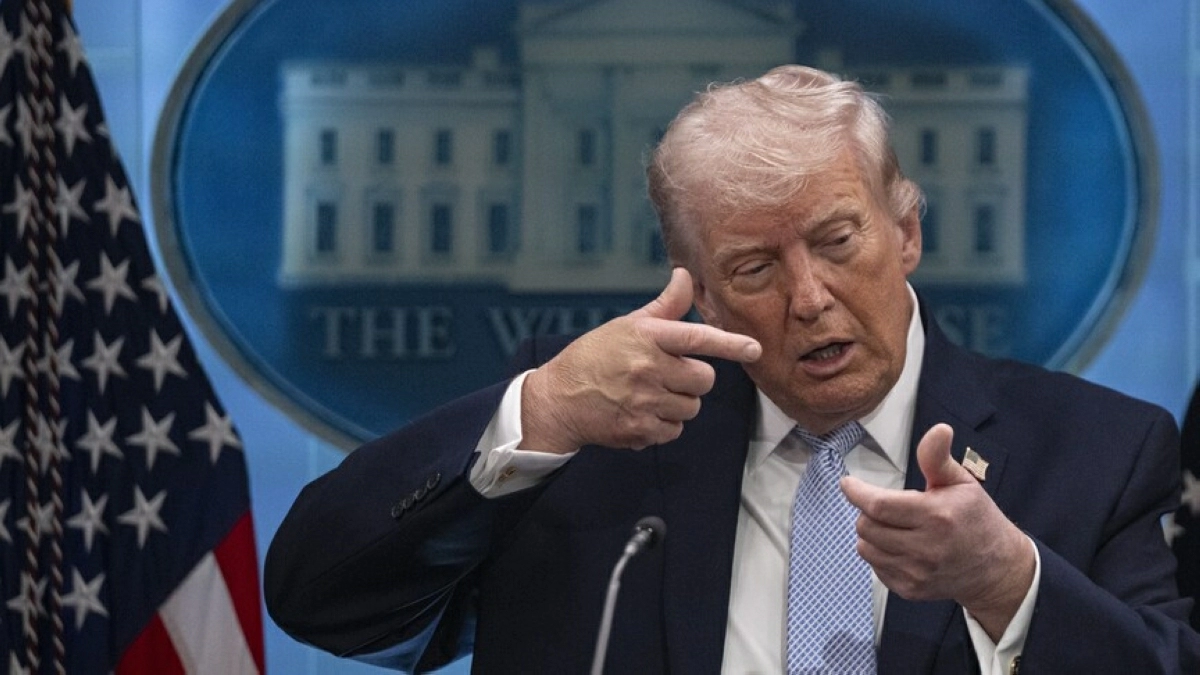
U.S. President Donald Trump warned on Tuesday that "a complete civilization will end tonight" if Iran does not reach an agreement by the deadline set for 8 PM Washington time. This warning came about 12 hours before the deadline that requires Tehran to reach an agreement involving the reopening of the Strait of Hormuz or face potential military strikes.
In a post on Truth Social, Trump stated, "A complete civilization will end tonight, and it cannot be revived. I do not want that to happen, but it is likely to happen." He noted that this moment could be one of the "most important moments in the long and complex history of the world."
Details of the Event
Trump's remarks come at a sensitive time as tensions between the United States and Iran escalate. Trump demands that Iran reach a comprehensive agreement that includes reopening the Strait of Hormuz, which is one of the world's most critical maritime routes, through which approximately 20% of the world's oil passes. Should an agreement not be reached, Trump warned that the United States may resort to military options.
Despite the harsh warnings, Trump left the door open for the possibility of a diplomatic breakthrough, stating, "Perhaps something revolutionary and wonderful will happen." These remarks raise questions about the seriousness of the United States in dealing with Iran and whether there are real opportunities for negotiation.
Background & Context
The history of U.S.-Iran relations is fraught with tensions and conflicts. Since the Iranian Revolution in 1979, relations between the two countries have deteriorated continuously, with the United States imposing strict economic sanctions on Iran due to its nuclear program and support for armed groups in the region.
In recent years, tensions have escalated further, especially after the United States withdrew from the Iranian nuclear agreement in 2018. Since then, Iran has expanded its nuclear program, raising international concerns about its ability to develop nuclear weapons.
Impact & Consequences
If an agreement is not reached, it could lead to military escalation in the region, affecting both regional and global stability. Oil prices could be significantly impacted, as any escalation in the Strait of Hormuz could lead to a sharp increase in prices, affecting the global economy.
Moreover, military escalation could lead to severe humanitarian consequences, potentially causing mass displacement of populations and increasing civilian suffering in the region. Any military action could also draw other countries into the conflict, complicating the situation further.
Regional Significance
Arab countries neighboring Iran, such as Iraq, Saudi Arabia, and the UAE, are among the most affected by the current tensions. Any escalation in the conflict between the United States and Iran could have direct repercussions on security and stability in these countries.
Arab nations may find themselves compelled to take clear stances amid these tensions, potentially leading to new divisions in the region. At the same time, some countries may seek to strengthen their ties with the United States as a means to protect their interests.
In conclusion, the situation remains tense, with growing concerns that current events may lead to an undesirable escalation. The world is watching closely to see what the coming hours will bring and whether there is a real opportunity for an agreement that ensures peace and stability in the region.