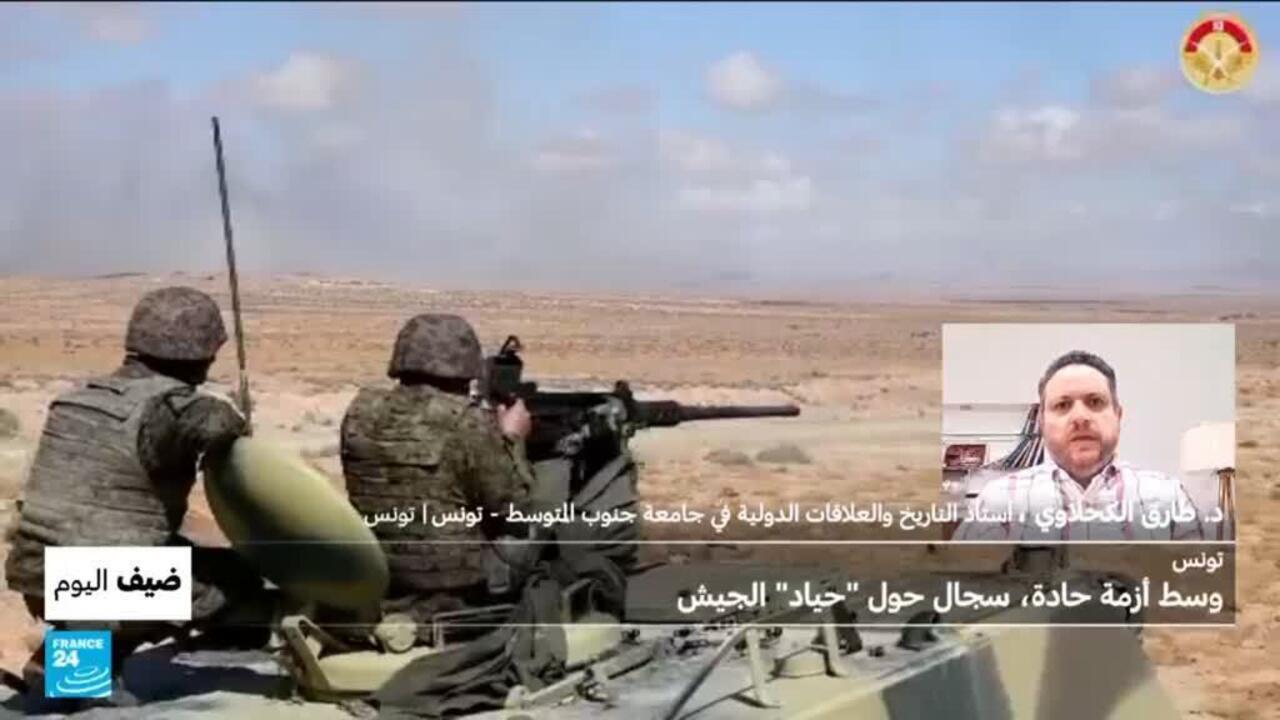
Amid an increasing political and economic crisis, the Tunisian Ministry of Defense issued a statement on its website affirming the military's commitment to neutrality and adherence to state laws. This statement was a response to what the ministry described as "the recurring attempts to involve the military institution and its leaders in political disputes and to question its neutrality and independence."
Tunisia is currently experiencing a state of social tension, with numerous citizens taking to the streets of the capital to protest against President Kais Saied's policies. Demonstrators accused Saied of turning the country into a "large prison," pointing to a deterioration in public freedoms and a deepening economic crisis.
Details of the Situation
The statement from the Ministry of Defense comes at a sensitive time, as pressures on the Tunisian government mount due to deteriorating economic conditions. The country has witnessed rising unemployment rates and inflation, negatively impacting the standard of living. Additionally, protests that have erupted in several Tunisian cities reflect widespread discontent with government policies.
The Tunisian army, which played a pivotal role in the Tunisian revolution of 2011, is now striving to maintain its neutrality in these complex circumstances. The ministry has confirmed that the military institution will remain distant from political disputes, reflecting its desire to preserve stability in the country.
Background & Context
Historically, the Tunisian army has always been a symbol of stability in the country. After the revolution, the army managed to maintain its neutrality in political conflicts, helping to avoid chaos. However, the current situation is different, as pressures on the government are increasing, raising concerns about the possibility of military intervention in political affairs.
Tunisia faces significant challenges on both economic and social fronts, with protests increasing in recent years due to corruption and mismanagement. These conditions make it difficult for the current government to achieve stability, heightening fears about the country's future.
Impact & Consequences
If protests continue, they could exacerbate security conditions in Tunisia. Military intervention in politics could lead to greater instability, threatening the democratic gains achieved by the country after the revolution. Furthermore, any slide into chaos could negatively impact the Tunisian economy, which requires foreign investments to improve the situation.
The army's commitment to neutrality may be a positive step in this context, but it requires the government to take effective measures to address the economic and social crises. Without genuine reforms, Tunisia will remain trapped in a cycle of crises.
Regional Significance
Tunisia is considered a model in the Arab region, being one of the first countries to experience the Arab Spring revolutions. Any deterioration in conditions there could affect neighboring countries, as other peoples may draw inspiration from the Tunisian protests. Additionally, Tunisia's stability is crucial for regional security, especially given the challenges faced by other countries in the area.
In conclusion, the situation in Tunisia remains complex, requiring a swift and effective response from the government to the current crises. The army's commitment to neutrality may help maintain stability, but it also necessitates a strong political will to implement necessary reforms.