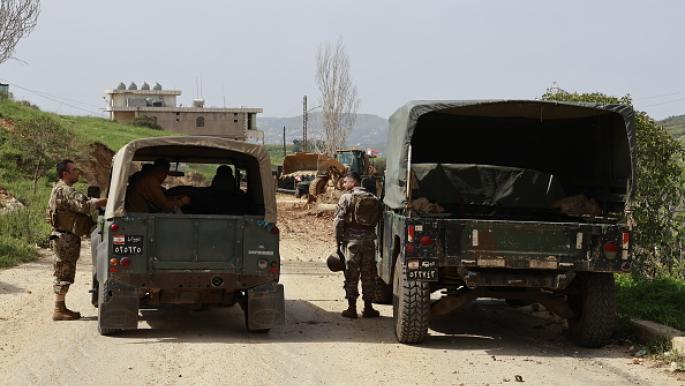
The United States has imposed sanctions on a number of officers in the Lebanese army and General Security, representing one of the strongest political messages directed at Lebanon. These sanctions come at a sensitive time as the Pentagon prepares to hold a security meeting with Lebanese officials, underscoring the increasing tensions in relations between Washington and Beirut.
Through these sanctions, the United States aims to pressure the Lebanese government amid the political and economic crises the country is facing. The sanctions include asset freezes and financial transaction bans, reflecting Washington's concerns about the impact of these conditions on regional stability.
Details of the Sanctions
The American sanctions were introduced following reports that some Lebanese officers are involved in activities that contradict American interests in the region. This escalation reflects Washington's policy aimed at enhancing regional security by reducing the influence of armed groups that it considers a threat.
The anticipated security meeting at the Pentagon will bring together representatives of the Lebanese government and American officials, where both sides are expected to discuss ways to enhance security cooperation and combat terrorism. This step comes at a time when the region is witnessing increasing tensions, adding to the importance of this meeting.
Background & Context
Lebanon faces multiple challenges, including a crippling economic crisis that has led to the collapse of the national currency and a deterioration in living standards. In this context, the Lebanese government is seeking international support, but the American sanctions may complicate these efforts.
Historically, Lebanese-American relations have been volatile, experiencing periods of cooperation and tension. The current sanctions are part of Washington's policy aimed at containing Iranian influence in the region, which is considered one of the main reasons behind these measures.
Impact & Consequences
The impact of these sanctions could be profound on internal stability in Lebanon, potentially exacerbating economic and social crises. The Lebanese government may struggle to cope with internal and external pressures, increasing the state of instability.
Moreover, these sanctions may affect Lebanon's relations with other countries, as nations may hesitate to cooperate with Lebanon for fear of the repercussions of American sanctions. This could lead to further isolation of Lebanon from the international community.
Regional Significance
The Arab region suffers from ongoing tensions, and American sanctions on Lebanon may escalate these tensions. Neighboring countries could also be affected, especially given the presence of armed groups in the region that Washington considers a threat.
Ultimately, this step reflects the United States' policy in the region, which aims to enhance security and stability, but it may sometimes yield counterproductive results, necessitating close monitoring of upcoming developments.