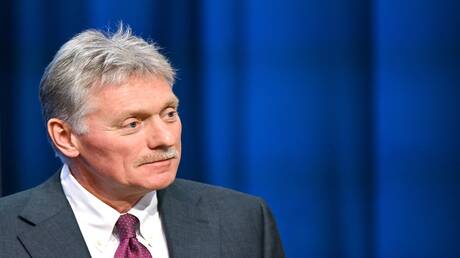
Kremlin spokesperson Dmitry Peskov has revealed that Western corporate appetite for investment within Russian markets has not completely dissipated despite the storm of economic sanctions that have struck Moscow over nearly three years. Peskov confirmed in press statements that "the interest has not disappeared and remains present," raising questions about multinational corporations' strategies in dealing with one of the world's largest markets.
The Kremlin spokesman explained that numerous Western companies maintain secret communication channels with Russian officials to discuss potential return scenarios, despite the legal and political risks they face in their home countries. This statement comes as Moscow seeks to strengthen the concept of "economic sovereignty" by replacing Western platforms with local and Asian alternatives, yet implicitly acknowledges the continuing need for European and American technologies and investments in strategic sectors.
Statement Details and Timeline Context
Peskov did not specify in his statements the names of the concerned companies or the sectors witnessing this continued interest, but indicated that the Russian administration receives "continuous signals" from Western business circles. These revelations come amid reports that some major brands that announced their withdrawal from Russia following the military operation in Ukraine continue to import their products through gray channels in neighboring countries such as Armenia, Kazakhstan, and Turkey.
Observers believe that Peskov's statements aim partly to send reassuring messages to domestic investors and to signal that Russia's economic isolation may not be permanent. The European Union and the United States have imposed dozens of sanction packages on Moscow since February 2022, covering oil, gas, banking, and technology sectors, prompting more than 1,000 companies to suspend operations or leave the Russian market entirely.
Historical Context and the Withdrawal Wave
The past two years have witnessed the largest wave of foreign investment withdrawal in modern Russian history. Corporate giants such as McDonald's, Starbucks, Shell, and BP departed, while major European banks reduced their financial exposure to the Russian market to almost zero. The direct losses to the Russian economy from these withdrawals exceeded $240 billion according to estimates from the Russian Ministry of Economy, while Western companies themselves lost markets where annual sales volumes reached hundreds of billions.
However, Russia managed to pivot a large portion of its economy toward Asia, increasing imports from China by more than 60%, with India becoming the primary purchaser of discounted Russian oil. Nevertheless, advanced technologies and precision industrial equipment remain a significant obstacle for vital Russian sectors, explaining why some Western companies wish to maintain a "back door" for future returns.
Economic Implications and Survival Strategies
Peskov's remarks reflect a complex economic reality where the Russian economy suffers from shortages in technical capital and long-term investments, despite withstanding the initial shock of sanctions. Some Western companies have resorted to alternative strategies to remain in the market without violating sanctions, such as selling licenses to local Russian companies with buyback agreements for the future, or investing through intermediary entities in countries not participating in sanctions.
Moscow appears to be exploiting these windows to attract indirect investments, particularly in energy, rare metals, and agriculture sectors where Russia holds competitive global advantages. The Kremlin has repeatedly announced that any Western company wishing to return will have its request considered "individually," meaning special privileges may be granted to companies offering vital technologies or creating extensive employment opportunities.
Regional Impact and Investment Opportunities
These developments carry significant importance for the Arab world, which is witnessing deepening economic relations with Russia amid the neutral stance most Arab countries maintain regarding the Ukrainian conflict. Trade volume between Russia and Arab countries has risen substantially, with the UAE, Egypt, and Saudi Arabia becoming among Moscow's largest trading partners in the region, benefiting from the vacuum left by Western companies.
The growing Western interest in returning to Russia opens new horizons for Arab companies to act as intermediaries or local partners for these Western firms, particularly in reconstruction, infrastructure, and logistics. Additionally, the stabilization of Russian-Western economic relations—should it occur—would positively reflect on global energy prices, benefiting both oil-importing and oil-exporting Arab nations alike. The scene remains contingent on military and political developments, but the Kremlin signals confirm that the Russian market has not permanently closed its doors to the West.