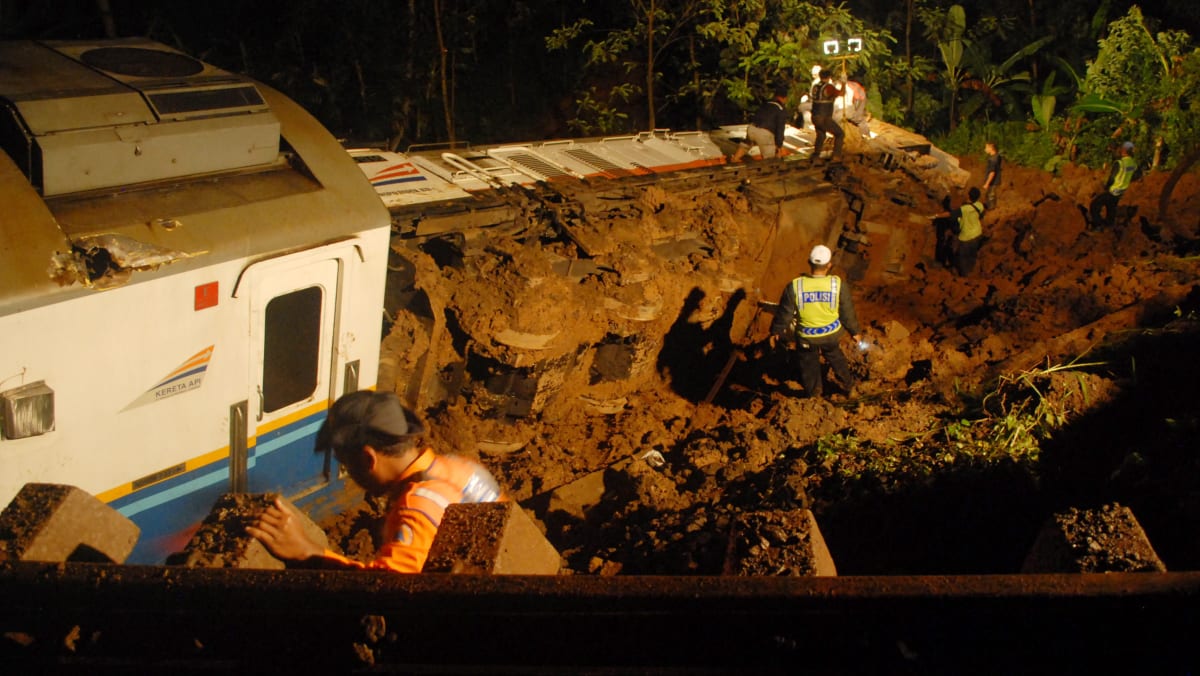
PT Kereta Api Indonesia (Persero) has confirmed that it is accelerating efforts to address landslides that occurred in the Bandung area of West Java, specifically between Maswati and Sasaksat stations. Anne Borba, the Deputy Head of Corporate Communications, stated that the focus is on clearing the tracks and evacuating damaged equipment to ensure that train operations can return to normal as soon as possible.
Anne explained that the landslides at the site disrupted train number 174 (Ciremai) and several other trains in the area. She noted that the cleaning and repair process could take approximately five hours, starting from 4:30 PM local time.
Details of the Incident
The landslide caused the track to close at kilometer 142+8/9, leading to significant disruption in train services. Anne mentioned that the company has made adjustments to the train schedules as part of its efforts to ensure passenger safety and smooth service delivery.
The company also confirmed that it is working in cooperation with all relevant authorities to ensure that operations proceed safely and in an organized manner. They expressed their apologies to passengers for any inconvenience caused by this incident.
Background & Context
Landslides are a common natural phenomenon in Indonesia, particularly in mountainous areas like Bandung, where heavy rainfall can erode soil and increase the likelihood of such incidents. The country has experienced several similar cases in recent years that have disrupted transportation.
Historically, Indonesia has faced significant challenges in infrastructure, making it susceptible to such incidents. The government has shown ongoing efforts to improve the railway network, but climate change and geographical conditions remain obstacles to these efforts.
Impact & Consequences
Landslides can have negative effects on transportation and the local economy. In the case of Bandung, this incident is expected to affect both passenger and freight movement, potentially leading to delays in delivery schedules and increased transportation costs.
Moreover, the recurrence of such incidents could impact the reputation of railway services in Indonesia, prompting passengers to seek alternative options. Therefore, improving infrastructure and enhancing safety systems has become an urgent necessity.
Regional Significance
Although the incident occurred in Indonesia, there are lessons that Arab countries can learn, especially those facing similar challenges in infrastructure and transportation. Good planning and investment in safety technologies can help mitigate risks associated with natural phenomena.
In conclusion, this incident serves as a reminder of the importance of preparedness in facing environmental challenges and climate change, highlighting the need for effective strategies to ensure the safety of transportation systems.