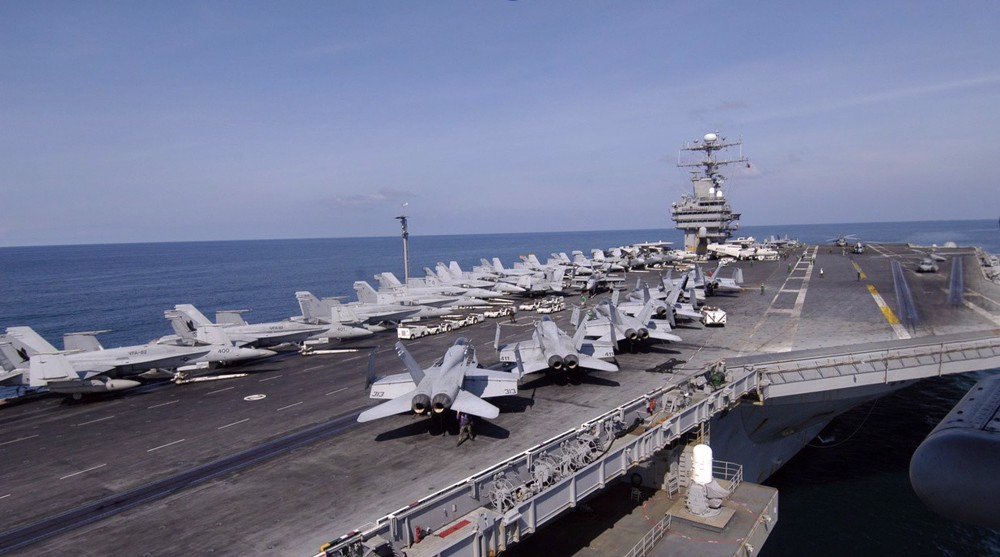
Recent social media accounts have circulated a video claiming to document a new attack by Iranian forces on the American aircraft carrier USS Abraham Lincoln in the Arabian Sea. The video shows a large warship engulfed in flames following a powerful explosion, raising questions about the possibility of a drone or missile attack from Iran, especially amid escalating regional tensions.
However, a team from Al Jazeera's open-source investigation verified the authenticity of the clip through visual analysis, identifying clear technical indicators that it was generated using artificial intelligence. Among these indicators were distortions in the ship's structural details and inconsistencies in the movement of flames and smoke.
Details of the Incident
The analysis also revealed the absence of any realistic signs such as the ship's identification numbers or known armament patterns for American aircraft carriers. The video has garnered over one million views, reflecting the impact of misinformation in the digital space.
Upon conducting a reverse search of the video, it was found to have been previously published by accounts known for disseminating AI-generated content that supports Iranian propaganda. This reinforces the hypothesis that the video has been recycled within a misleading context aimed at suggesting an actual attack.
Background & Context
These claims arise in the context of the American-Iranian war that erupted in late February 2026, following extensive military escalation that included strikes on Iranian facilities and retaliatory missile responses. This escalation has broadened tensions to the Gulf and Arabian Sea, threatening vital passages such as the Strait of Hormuz, further intensifying regional tensions.
It is noteworthy that the aircraft carrier USS Abraham Lincoln was deployed in the Arabian Sea as part of U.S. Central Command operations, which confirmed its presence during the epic wrath operation against Iran.
Impact & Consequences
Concerns are growing that such misinformation could lead to further escalation in tensions between the United States and Iran. While the involved parties seek to avoid any military escalation, the spread of such false news can contribute to creating a state of panic and anxiety in the region.
Moreover, the use of artificial intelligence in producing misleading content raises questions about how to handle information in the digital age, necessitating an increase in awareness regarding how to verify sources and circulating information.
Regional Significance
In light of these circumstances, Arab countries must be cautious of the impact of this misinformation on regional security. The tensions between the United States and Iran could directly affect the stability of the region, prompting the need for enhanced cooperation among Arab nations to address common challenges.
In conclusion, it remains essential for media and digital communities to adopt effective strategies to combat misinformation and promote a culture of fact-checking, ensuring that current events are not exploited for political or propaganda purposes.