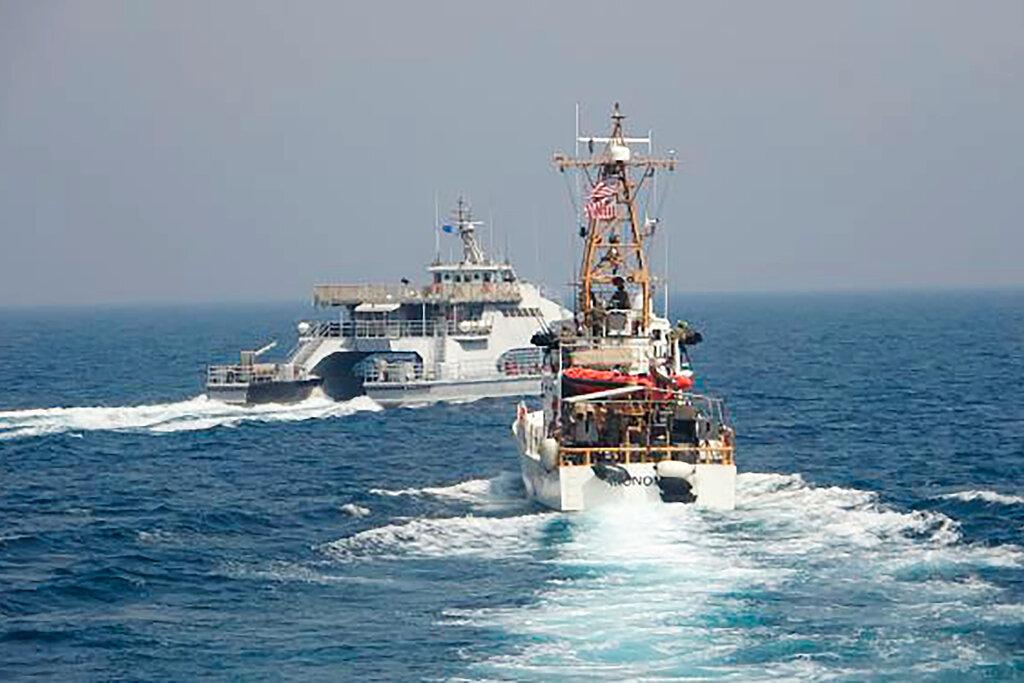
The Secretary-General of the Gulf Cooperation Council, Jassim Al-Budaiwi, urged the UN Security Council to issue a resolution that guarantees freedom of navigation in the Hormuz Strait and stops the increasing Iranian aggressions in the region. These demands come at a time when tensions in the Gulf are rising, threatening maritime safety and impacting global trade.
In statements made during a press conference, Al-Budaiwi emphasized that the continued Iranian attacks on commercial vessels pose a threat to both regional and international security. He called on the international community to take urgent action to protect navigation in one of the world's most important maritime corridors.
Details of the Incident
Concerns are growing over the escalation of Iranian activities in the Hormuz Strait, through which approximately 20% of the world's total oil trade passes. Recently, the region has witnessed a series of attacks on oil tankers and commercial ships, raising alarms among concerned nations and leading to repeated calls from Gulf countries for international intervention.
Al-Budaiwi pointed out that these aggressions not only affect Gulf countries but also threaten the stability of global energy markets. He confirmed that the Gulf Cooperation Council is working to enhance cooperation with international partners to ensure maritime safety in the region.
Background & Context
The tensions in the Hormuz Strait date back many years, as Iran considers this vital corridor part of its regional influence. Relations between Iran and Gulf countries have seen increasing tensions since 2011, amid escalating conflicts in Syria and Yemen.
In recent years, Iran has conducted several targeting operations against vessels, prompting Western nations to bolster their military presence in the region. These events have led to an increased American military presence in the Gulf, heightening tensions between Tehran and Washington.
Impact & Consequences
If effective action is not taken by the international community, the escalation of Iranian aggressions could exacerbate conditions in the region, threatening the stability of global oil markets. This could lead to rising oil prices, negatively impacting the global economy.
Moreover, the continuation of these aggressions may drive Gulf countries to strengthen their military alliances with major powers, increasing the likelihood of armed conflicts in the region. This situation poses a threat to regional security, as it could escalate existing conflicts or spark new ones.
Regional Significance
Navigation in the Hormuz Strait is a lifeline for Arab countries, as many of these nations rely on oil and gas exports. Therefore, any threat to navigation in this area directly impacts their economies.
Additionally, the escalation of tensions in the Gulf could lead to political repercussions, as some Arab countries may reassess their foreign policies and alliances. Under these circumstances, it becomes essential for Arab nations to unite to face common challenges.
In conclusion, the demand from the Secretary-General of the Gulf Cooperation Council represents an important step towards enhancing maritime security in the region. The international community must respond to these calls to ensure the safety of navigation in the Hormuz Strait and protect global trade.