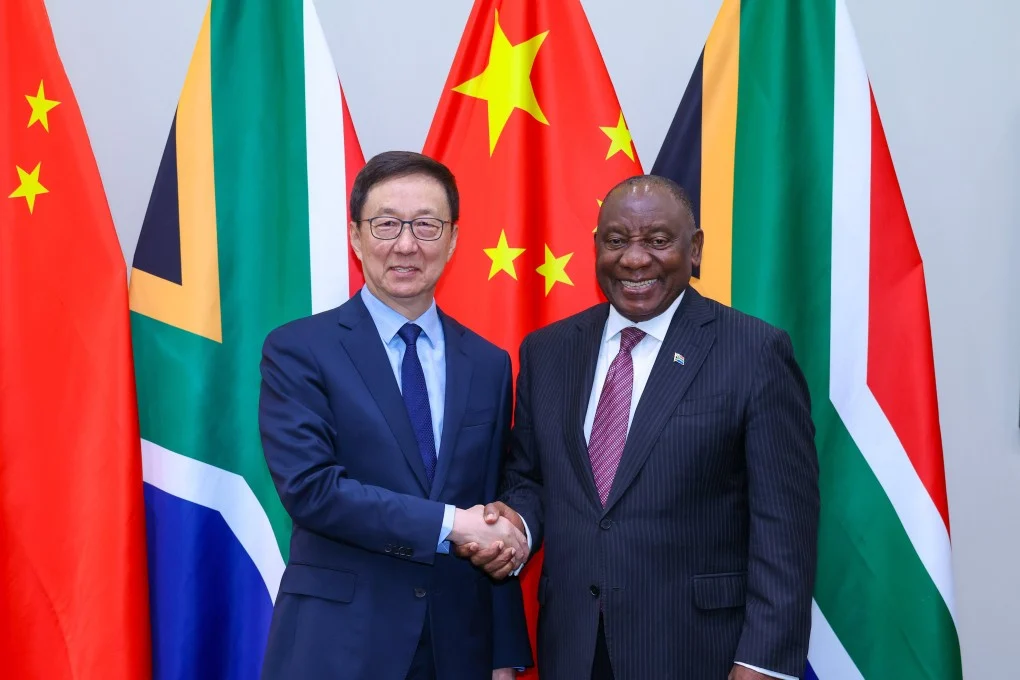
In a move reflecting the rising tensions among major powers, China has confirmed its ongoing support for South Africa as President Cyril Ramaphosa's invitation to attend the G7 summit in France was withdrawn. This announcement comes at a sensitive time, as the United States has exerted pressure on its allies to refrain from engaging with South Africa, illustrating the global political and economic tensions at play.
The government in Pretoria announced that the invitation extended by French President Emmanuel Macron to Ramaphosa during last year's G20 summit held in Johannesburg has been rescinded. Officials clarified that the organizers did not want to see the United States absent from the summit, leading to this unexpected decision.
Details of the Event
This step comes at a critical juncture for international relations, as the United States seeks to bolster its position against China's growing influence on the African continent. Many observers have noted that the withdrawal of the invitation reflects Washington's concerns that South Africa could become a launchpad for China to enhance its economic and political ties in the region.
In contrast, China has reiterated its commitment to supporting South Africa, viewing it as a strategic partner in various fields, including trade and investment. A spokesperson for the Chinese Foreign Ministry stated that Beijing would work to enhance cooperation with Pretoria, emphasizing the importance of bilateral relations in addressing global challenges.
Background & Context
Historically, South Africa has been regarded as one of the prominent nations on the African continent, playing a pivotal role in regional politics and economics. However, relations with the United States have experienced increasing tensions in recent years, particularly amid the escalating competition between Washington and Beijing.
It is noteworthy that the G7 summit, which includes the world's major economies, serves as an important platform for shaping global policies. Therefore, the withdrawal of Ramaphosa's invitation could impact South Africa's image on the international stage and reflects the challenges it faces in strengthening its relations with major powers.
Impact & Consequences
This development could have far-reaching implications for international relations, potentially strengthening ties between China and South Africa, thereby increasing Beijing's influence on the African continent. Additionally, this may encourage other countries to reassess their relationships with the United States, especially in light of the mounting American pressures.
On the other hand, this could exacerbate tensions between the United States and China, as both seek to enhance their influence in various regions around the world. Consequently, this event may have repercussions on economic and political policies in numerous countries.
Regional Significance
For the Arab region, these developments underscore the importance of strengthening relations with African nations, particularly amid the economic and political challenges they face. Relations with China could be beneficial for Arab countries as they seek to enhance economic and trade cooperation with the African continent.
Moreover, strengthening ties with South Africa could open new avenues for collaboration in multiple areas, including energy and trade. Thus, this event could present an opportunity for Arab nations to bolster their influence on the African continent.