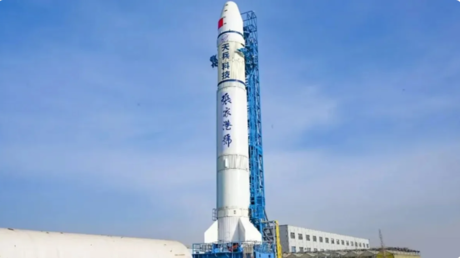
Chinese company Space Pioneer announced the failure of its launch of the Tianlong-3 rocket, designed to compete with the Falcon 9 rockets of SpaceX. This failure represents a new blow to China's ambitions in the space sector, as the country seeks to expand its influence in this vital area.
This incident comes at a sensitive time, as China hoped that the Tianlong-3 would contribute to enhancing its ability to launch satellites and spacecraft more quickly and efficiently. The rocket was designed to be an effective alternative to traditional rockets, reflecting modern trends in the space industry.
Details of the Incident
In the details of the incident, the launch of the Tianlong-3 was scheduled to take place from a launch center in China, but the operation did not proceed as planned. The company did not provide specific details regarding the reasons for the failure, raising questions about the quality of manufacturing and the technologies used in the rocket's development.
The Tianlong-3 is considered part of China's ambitious strategy to develop its space capabilities, as the country aims to achieve significant milestones in this field, including sending astronauts to the moon and developing its own space stations.
Background & Context
In recent years, China has witnessed remarkable progress in space, having launched several successful missions, including sending vehicles to the moon and Mars. However, the failure of the Tianlong-3 launch highlights the challenges the country faces in achieving its ambitious goals.
China seeks to reduce its dependence on Western technology, particularly American technology, in the space sector. However, the repeated failures in rocket launches may hinder these efforts and impact the reputation of Chinese companies in the global market.
Impact & Consequences
The failure of the Tianlong-3 launch could have negative effects on China's future plans in space, potentially leading to delays in planned projects and increased costs. This failure may also affect investor confidence in Chinese companies specializing in space technology.
Furthermore, this failure may increase pressure on the Chinese government to improve quality standards and the technologies used in rocket development, which may require additional investments in research and development.
Regional Significance
As Arab countries strive to enhance their capabilities in space, China's failure to launch the Tianlong-3 may have implications for Arab-Chinese cooperation in this field. This failure could lead to a reevaluation of current and future partnerships between Arab nations and China in the space sector.
It may also open the door for Arab countries to enhance their investments in developing their own space technology, contributing to achieving their national goals in this sector.
The failure of the Tianlong-3 launch represents a significant challenge to China's ambitions in space and reflects the difficulties it faces in achieving its objectives. At the same time, this failure may have far-reaching implications for international cooperation in space, including in the Arab region.