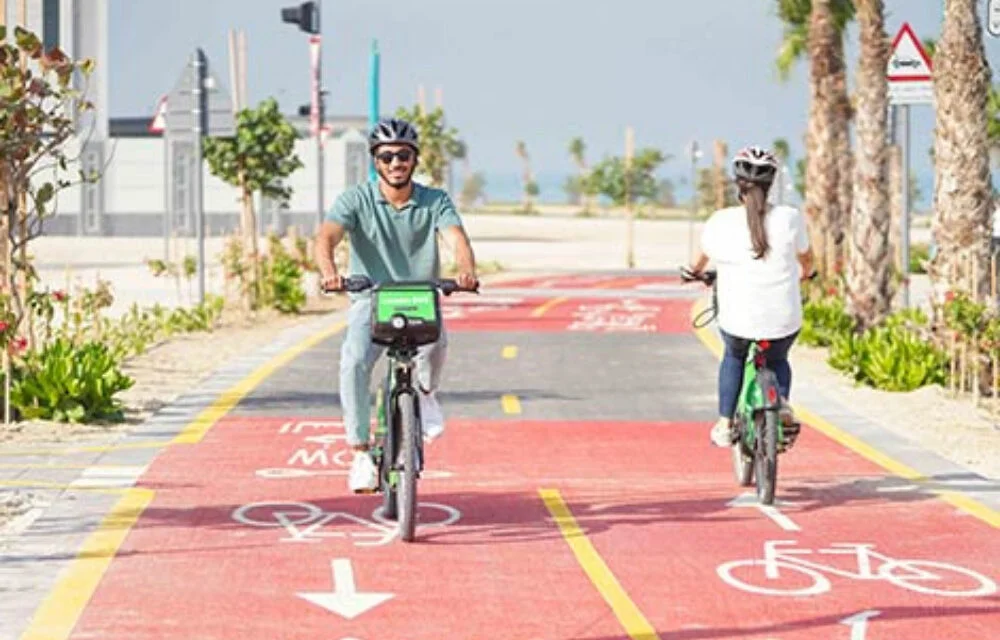
The Roads and Transport Authority in Dubai has announced the completion of 13 new bicycle paths throughout the emirate, as part of its efforts to enhance sustainable mobility and provide eco-friendly transport options. This project is part of a comprehensive plan aimed at encouraging the use of bicycles as a safe and healthy mode of transport, contributing to reduced traffic congestion and improved air quality.
The new paths are distributed across various areas in Dubai, designed to meet the needs of all cyclists, whether they are beginners or professionals. These paths are equipped with advanced facilities, including bike repair stations and rest areas, ensuring a comfortable and safe experience for riders.
Event Details
This initiative is part of Dubai's Vision 2040, which aims to make the city one of the best in the world in terms of quality of life. The Director General of the Roads and Transport Authority stated that these paths will contribute to achieving the emirate's sustainability goals, as they have been designed according to the highest global standards.
The new paths include dedicated bicycle lanes with a total length of 100 kilometers, facilitating movement between neighborhoods and commercial and tourist areas. Special traffic signals for bicycles have also been provided to ensure user safety.
Background & Context
This initiative comes at a time when there is a growing global awareness of the importance of sustainable mobility, as many major cities seek to reduce reliance on traditional transportation methods. Studies have shown that using bicycles helps reduce carbon emissions and improve public health.
In recent years, Dubai has seen a significant increase in the number of cyclists, prompting the authority to develop an integrated infrastructure to support this trend. Numerous events and initiatives have been implemented to encourage residents to use bicycles as a means of transport.
Impact & Consequences
The new paths are expected to enhance the culture of cycling in Dubai, leading to reduced traffic congestion and improved air quality. This step will also boost eco-tourism, allowing visitors to explore the city by bicycle.
Moreover, providing safe bicycle paths reflects Dubai's commitment to creating a sustainable urban environment, making it a model for the region. This approach may encourage other cities in the Arab world to adopt similar policies to promote sustainable mobility.
Regional Significance
Dubai's experience in developing bicycle paths serves as a model for the Arab region, where many cities face challenges in transportation and congestion. This initiative can inspire other countries to adopt similar strategies aimed at improving the quality of life in urban areas.
Additionally, promoting a cycling culture can contribute to enhancing public health and reducing costs associated with traditional transportation methods. The success of this initiative may lead to the development of similar projects in other Arab cities, contributing to sustainable development.
In conclusion, the completion of 13 bicycle paths in Dubai represents an important step towards achieving the emirate's vision for sustainability and smart mobility. These paths are expected to improve quality of life and enhance public health, making Dubai a model to be emulated in the region.