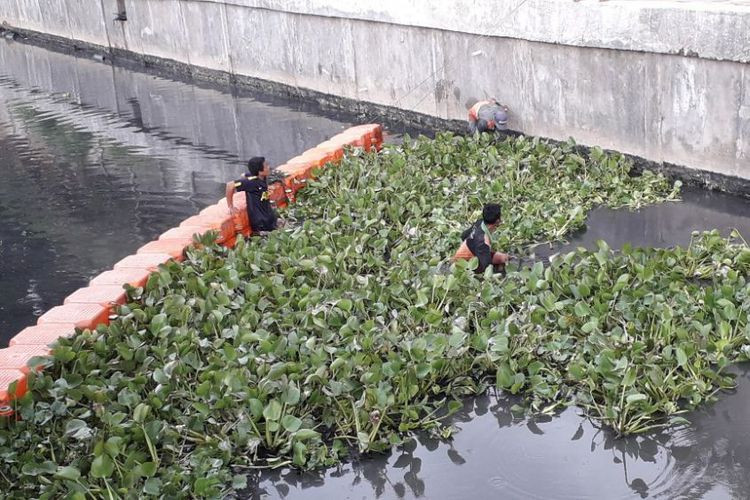
The Jakarta Waste Management Unit (UPS) has confirmed that efforts to remove water hyacinth from Pluit Lake in North Jakarta will soon be completed, with only a few areas remaining that require treatment. Seno Rivaldi, the supervisor of the Waste Management Unit, explained that the team began work on removing these plants last Tuesday, and the operation is proceeding smoothly.
Rivaldi noted that there are still some spots submerged with aquatic plants, and the team is waiting for the water level in the lake to rise, as the site is shallow and boats cannot enter without the risk of capsizing.
Details of the Operation
Approximately 30 employees from the Waste Management Unit have been tasked with removing water hyacinth using a variety of equipment, including ADPE boats, motorized boats, aquatic drilling machines, and With Arperter 800 boats, along with Dreger Phonton equipment. Water hyacinth is a fast-growing aquatic plant, particularly in Pluit Lake, which serves as a source of groundwater for nearby homes.
Climate changes, such as intermittent rainfall and heat, contribute to the increased growth of these plants, which can double in size within a day. These measures have been taken to ensure the preservation of water quality in the lake, which is an important water source for the region.
Background & Context
Pluit Lake is considered one of the most important water bodies in Jakarta, playing a vital role in providing groundwater. With the increasing population density and human activities, the lake has faced significant challenges related to water pollution and uncontrolled growth of aquatic plants. In recent years, there has been a noticeable increase in efforts by the local government to improve water quality and manage water resources effectively.
The roots of the water hyacinth problem stem from inadequate water management in urban areas, leading to the accumulation of these plants in water bodies. Several projects have been implemented in recent years to improve the situation, but challenges remain.
Impact & Consequences
Addressing the water hyacinth issue is an important step towards improving water quality in Pluit Lake, as these plants can negatively affect aquatic life and lead to environmental degradation. The success of this operation could serve as a model for other areas facing similar problems, reflecting the importance of sustainable environmental management.
Moreover, improving water quality in Pluit Lake will positively impact the health of local residents, as clean water is essential for domestic use and agriculture. Thus, these efforts reflect the local government's commitment to enhancing the living conditions of its citizens.
Regional Significance
Many Arab countries face similar challenges regarding water management and aquatic plants in their water bodies. Jakarta's experience in addressing water hyacinth could provide valuable lessons for Arab nations struggling with similar issues, such as water pollution and the growth of unwanted aquatic plants.
These efforts could serve as an impetus for Arab countries to adopt effective strategies in water management and environmental quality improvement, contributing to sustainable development.