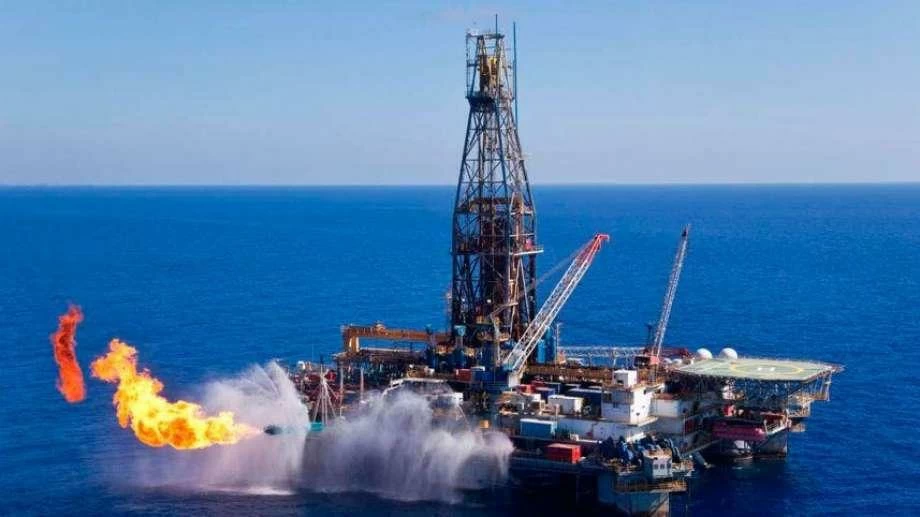
An Italian company announced today the discovery of natural gas and condensates in deep waters off the Egyptian coast, which strengthens the country's role as a regional energy hub. The new discovery was made at the 'Dennis W1' exploration well drilled within the Timsah concession, revealing initial reserves estimated at about two trillion cubic feet of natural gas, along with approximately 130 million barrels of condensates.
This discovery is located about 70 kilometers from the coast, in depths reaching 95 meters, making it very close to existing infrastructure. This proximity to current facilities is expected to facilitate the rapid and cost-effective development of the field, enhancing Egypt's ability to increase natural gas production.
Details of the Discovery
The company confirmed that the discovery reflects the significant potential of the sedimentary layers in this region and comes as part of an active exploration campaign in the Timsah concession, which is considered one of the company's key concessions in Egyptian waters. This discovery comes at a time when the Egyptian government is seeking to increase domestic gas production to meet the growing energy demand.
Egypt is also striving to compensate for any decline in some older fields, leveraging its strategic location to export gas to Europe and other markets. This discovery represents an important step towards achieving the government's goals of enhancing local and regional energy security.
Background & Context
Egypt is considered one of the leading countries in natural gas production in the Eastern Mediterranean region, having witnessed a notable increase in exploration and production activities in recent years. This discovery aligns with the Egyptian government's efforts to attract foreign investments and strengthen partnerships with global energy companies.
Historically, Egypt has heavily relied on natural gas to meet its domestic needs, and with the rising energy demand, it has become essential to increase local production. New discoveries like 'Dennis W1' reflect a positive trend towards achieving self-sufficiency and enhancing competitiveness in the regional market.
Impact & Consequences
This discovery is expected to have a significant impact on the Egyptian economy, contributing to increased state revenues from gas exports. Additionally, boosting natural gas production will help provide the necessary energy for economic growth, thereby enhancing the stability of the local market.
Moreover, new discoveries may open new avenues for regional cooperation in the energy sector, contributing to strengthening relations between Egypt and neighboring countries. This cooperation could lead to improved energy security in the region and enhance the ability of countries to face economic challenges.
Regional Significance
The discovery of natural gas off the coast of Egypt is an important step not only for Egypt but for the entire Arab region. With the increasing energy demand in Arab countries, Egypt can play a pivotal role in meeting this demand, thereby enhancing its position as a key supporter of energy security in the region.
This discovery may also encourage other countries in the region to explore their natural resources, potentially leading to further discoveries that enhance the ability of Arab nations to achieve sustainable development.
In conclusion, the discovery of natural gas off the coast of Egypt marks a milestone in the country's journey towards enhancing energy production and reflects the significant potential that the region possesses in this field.