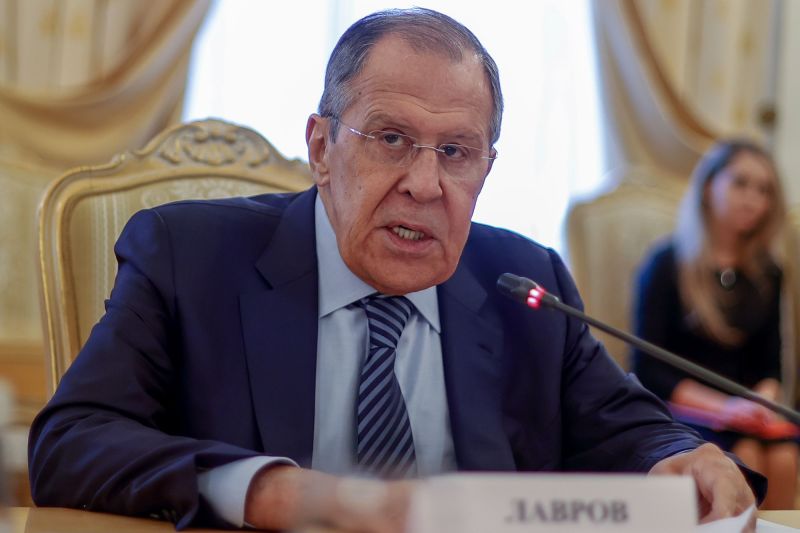
Russian Foreign Minister Sergey Lavrov met with his Iranian counterpart Hossein Amir-Abdollahian to explore diplomatic solutions to the Iranian crisis. This meeting occurs amid escalating tensions in the region, which calls for intensive diplomatic efforts to resolve ongoing conflicts.
These talks are part of the ongoing efforts by Russia and Iran to enhance bilateral cooperation, particularly in the area of regional security. Lavrov emphasized the importance of dialogue and negotiation as means to resolve crises, noting that Russia will continue its support for Iran in international forums.
Details of the Meeting
The meeting took place in the Russian capital, Moscow, where both sides discussed issues related to regional security and economic cooperation. Lavrov pointed out that Russia and Iran face common challenges that require close coordination between them. The situation in the Middle East and its impact on global security was also addressed.
For his part, Amir-Abdollahian stressed the importance of cooperation between the two countries in facing external pressures, indicating that Iran seeks to achieve lasting stability in the region. An agreement was reached to enhance bilateral relations in various fields, including energy and trade.
Background & Context
Historically, relations between Russia and Iran have been characterized by strategic cooperation, especially amid tensions with the West. In recent years, there has been an increase in military and economic cooperation between the two countries, reflecting a mutual desire to confront regional and international challenges.
These discussions come at a sensitive time, as tensions in the Middle East are escalating due to ongoing conflicts, including the wars in Syria and Yemen. Additionally, the Western sanctions imposed on Iran complicate the situation further, necessitating the search for effective diplomatic solutions.
Impact & Consequences
If an effective diplomatic resolution is reached, it could contribute to alleviating tensions in the region and enhancing stability. It may also lead to improved relations between Iran and Western countries, opening up new opportunities for economic cooperation.
On the other hand, Russia may face challenges if these efforts do not succeed, as the continuation of tensions could escalate conflicts and negatively impact its interests in the region. Therefore, the success of these talks is vital for achieving regional security.
Regional Significance
Developments in Russian-Iranian relations directly impact security and stability in the Arab region. Increased cooperation between Moscow and Tehran could mean strengthening Iranian influence in Iraq and Syria, raising concerns among some Arab countries.
At the same time, resolving conflicts could improve humanitarian conditions in conflict-affected areas, benefiting the affected Arab populations. Thus, monitoring the outcomes of these discussions is crucial for all parties involved.
In conclusion, there is hope that these diplomatic efforts will yield positive results that contribute to achieving peace and stability in the region, reflecting the importance of dialogue as a means to resolve conflicts.