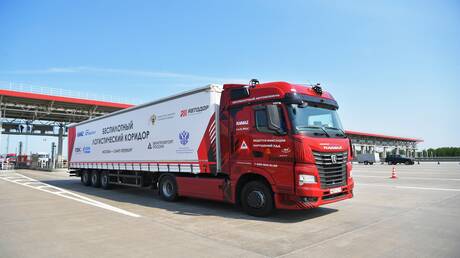
Russian Transport Minister Andrei Nikitin revealed that discussions are ongoing with Belarus and Kazakhstan concerning the deployment of self-driving trucks. These countries are striving to enhance cooperation in modern technology, particularly in the transportation sector, which has witnessed rapid developments in recent years.
Self-driving trucks are considered a technological innovation that promises to radically change the way goods are transported, potentially improving efficiency and reducing costs. Additionally, this technology could help decrease traffic accidents caused by human errors, making roads safer.
Details of the Discussions
The discussions between Russia, Belarus, and Kazakhstan are taking place within the framework of a strategic partnership aimed at developing smart transportation technologies. Nikitin noted that these projects may include field trials on Russian, Belarusian, and Kazakh roads, allowing for the testing of the effectiveness of these trucks under various conditions.
The Russian minister also emphasized the growing interest from private companies in these countries to invest in this sector, reflecting a trend towards innovation and modernization in transportation. These projects are expected to enhance the competitiveness of the three economies.
Background & Context
These discussions come at a time when the world is undergoing a significant shift towards the use of modern technology across various fields, including transportation. Many countries have begun exploring the potential of self-driving trucks, with the United States and China being among the pioneers in this domain.
Recent studies have shown that the use of self-driving trucks can reduce transportation costs by up to 30%. Furthermore, this technology promises to address many issues associated with traditional transportation, such as traffic congestion and air pollution.
Impact & Consequences
If Russia, Belarus, and Kazakhstan succeed in implementing these projects, it could have a significant impact on the transportation industry in the region. This is expected to create new job opportunities and strengthen economic cooperation among the three countries.
Moreover, the success of these projects may encourage other countries in the region to adopt modern technology in transportation, contributing to improved infrastructure and increased economic efficiency. In light of global economic challenges, this step could serve as a model for other nations.
Regional Significance
Although these discussions are focused in the Eurasian region, they hold important implications for the Arab region. The shift towards using modern technology in transportation could positively impact intra-Arab trade, contributing to enhanced economic integration.
Arab countries could benefit from the experiences of Russia, Belarus, and Kazakhstan in this field, especially given the logistical challenges they face. There may be opportunities for collaboration in developing smart transportation technologies, which would improve transportation efficiency in the region.
In conclusion, the discussions between Russia, Belarus, and Kazakhstan regarding self-driving trucks represent an important step towards enhancing technological and economic cooperation among these nations. As innovations in this field continue, we may witness a significant transformation in how transportation is managed in the future.