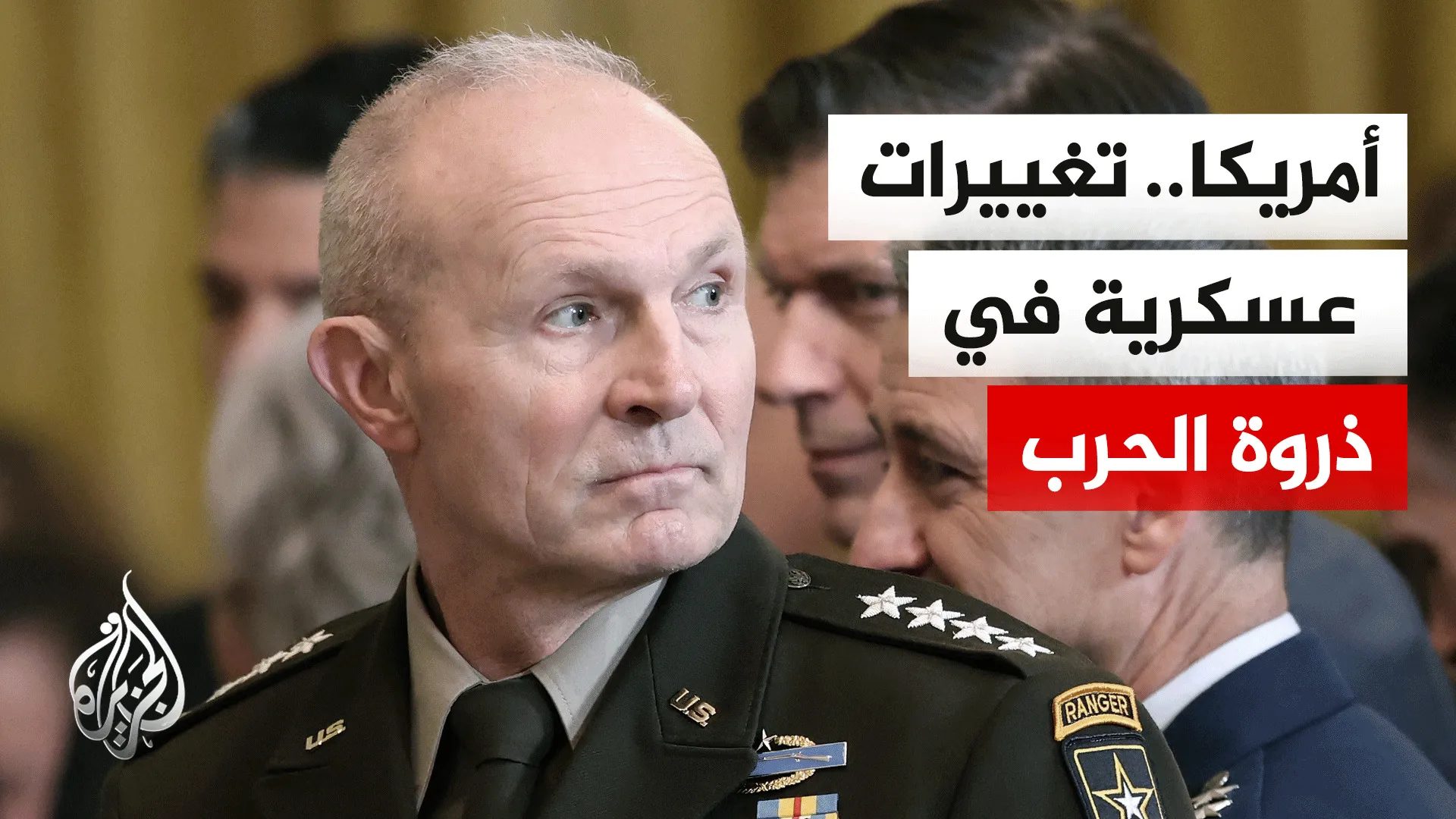
U.S. Secretary of War Pete Hegseth announced the dismissal of General Randy George from his position as Chief of Staff of the Army, sparking widespread questions about the transformations taking place within the U.S. military under President Donald Trump during his second term.
This decision comes at a sensitive time, as the United States is engaged in complex military issues, most notably the ongoing war against Iran, which increases the importance of restructuring the military leadership hierarchy.
Details of the Event
In an unexpected move, Hegseth requested General George to step down from his position, who was considered one of the most prominent professional leaders in the U.S. Army and a pillar of stability for ground forces since he took office in September 2023. George graduated from West Point in 1988 as an infantry officer and has over 35 years of field experience, having led military units in Iraq and Afghanistan.
During his service, George played a significant role in developing the doctrine of "multi-domain operations," which integrates ground capabilities with air, naval, cyber, and space forces. He also served as the senior military advisor to Secretary of Defense Lloyd Austin from 2021 to 2022, placing him close to decision-making circles.
Background & Context
As Chief of Staff of the Army, George was responsible for managing over one million soldiers within a complex system known as "force generation," which includes equipping, training, and arming the troops. His role was not limited to administrative duties; it extended to shaping combat doctrine, identifying army needs, and providing resources to commanders in the field.
The Army Chief of Staff serves as the executive arm of the largest branch of the armed forces and acts as a link between the Department of War and field units. The Chief of Staff represents a central figure in the chain of command, serving as a military advisor to the Secretary of Defense, in a relationship that balances policy-making and execution.
Impact & Consequences
Following George's dismissal, General Christopher Laineth, the Vice Chief of Staff, has been tasked with assuming the role temporarily. Laineth is known for his expertise in heavy ground operations and has previously held positions close to the Secretary of War, indicating that the current administration seeks to reshape military leadership in line with its strategic vision.
These changes are seen as a sign of a rebalancing of power between political and military decision-making in the United States, especially in light of the increasing security challenges facing the country, which may impact its military strategies in the future.
Regional Significance
These developments come at a sensitive time for the Arab region, where tensions in the Middle East are rising, particularly with ongoing conflicts in Iraq, Syria, and Yemen. Changes in U.S. military leadership may affect the United States' strategies in the region, reflecting on security and political situations.
Under these circumstances, Arab countries must closely monitor these transformations, as they may influence their relations with the United States and their military orientations in the future.