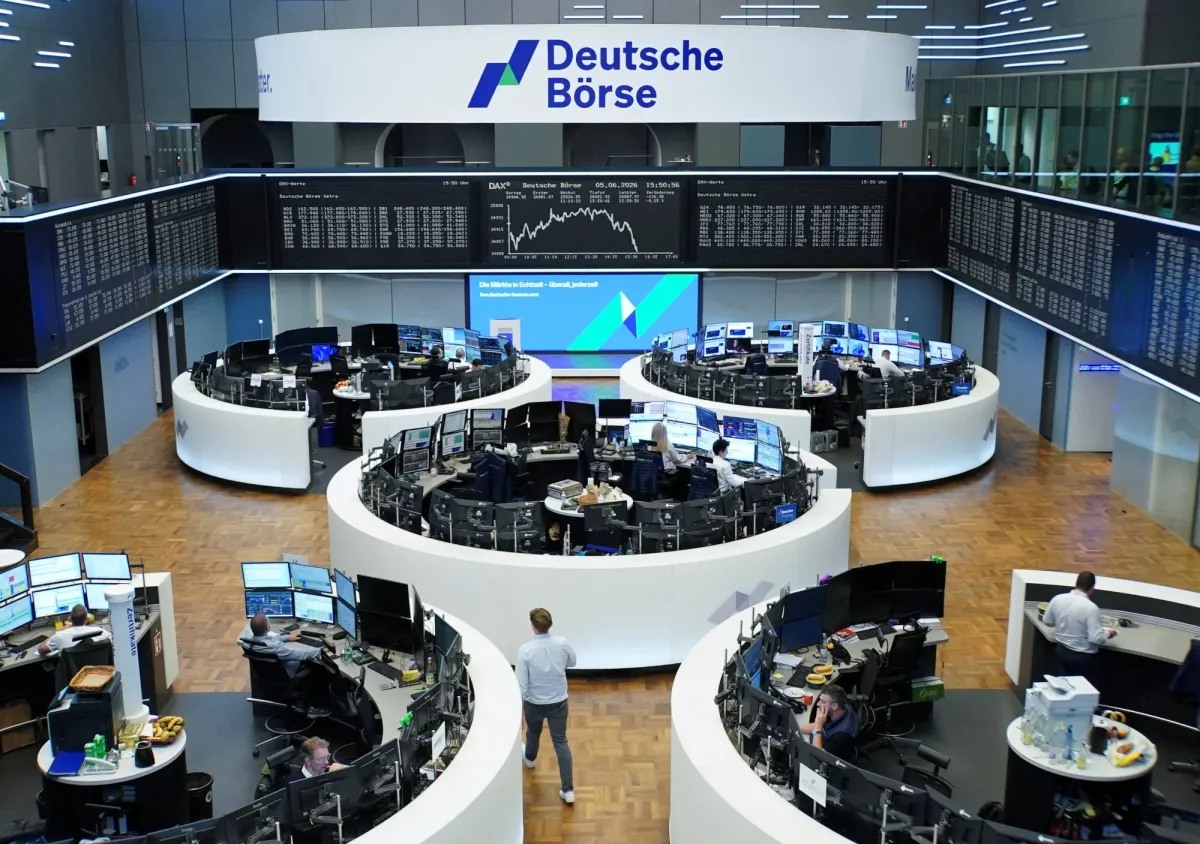
The European 'Stoxx 600' index has dropped to its lowest level in two weeks, recording a decline of 0.9% to reach 616.04 points. This downturn is attributed to rising tensions in the Middle East and extensive sell-offs of artificial intelligence stocks globally.
This decline followed a surge in oil prices by more than 4% due to gunfire exchanges between Israel and Iran over the weekend, heightening fears of a broader regional escalation and weakening hopes for a swift containment of tensions. These events significantly impacted European markets, with most major regional indices recording similar losses.
Details of the Event
Shares of energy-sensitive airlines, such as Lufthansa and Air France, fell by over 2% each. The technology sector also experienced a notable decline, dropping by 2.1% due to sharp losses on Wall Street at the end of last week, alongside a similar downturn in Asian markets.
Stocks of companies like Infineon and PEC Micron saw declines of 1.7% and 3.8% respectively, while shares of Legrand and Schneider Electric decreased by about 2% each. Despite current pressures, the European technology sector has shown strong gains this quarter, recording the largest quarterly performance among the sectors of the 'Stoxx 600' index so far.
Background & Context
In a related context, stronger-than-expected U.S. job data supported the Federal Reserve's inclination to keep interest rates unchanged, while markets continue to anticipate a potential rate hike in December. Investors are also awaiting the European Central Bank's decision on interest rates, set to be announced on Thursday, with widespread expectations for a 25 basis points increase.
In the mergers and acquisitions market, shares of Banca Monte dei Paschi di Siena surged by 9.5% following Intesa Sanpaolo, Italy's largest banking group, announcing a €30.6 billion acquisition offer for the bank. Conversely, shares of Intesa fell by 3.2%.
Impact & Consequences
Yields on government bonds in the Eurozone reached their highest levels in several weeks, as traders priced in the likelihood of the European Central Bank implementing three interest rate hikes by the end of 2026. This comes at a time when hopes for a swift reopening of the Strait of Hormuz are diminishing, which could impact energy supplies.
U.S. President Donald Trump stated that the exchanges of strikes between Israel and Iran would not hinder his administration's efforts to reach a peace agreement with Tehran, which could alleviate pressures on energy supplies. However, rising oil prices may increase inflationary risks, necessitating further tightening of monetary policy.
Regional Significance
Arab markets have also been affected by the escalating tensions in the Middle East, with analysts predicting that these events will impact the stability of financial markets in the region. Additionally, rising oil prices could positively reflect on the economies of some Arab nations, while putting pressure on others that rely on energy imports.
In conclusion, investors remain on alert for the political and economic developments in the region, as fears of escalating tensions and their impact on global markets continue to grow.