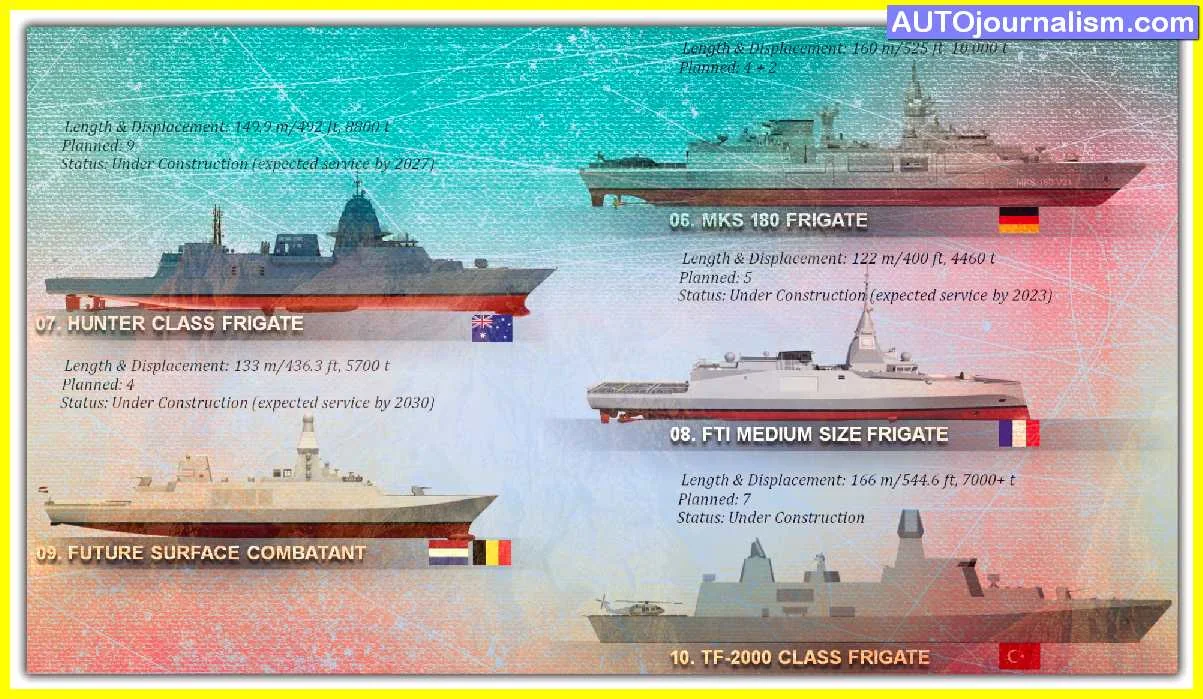
Frigates and destroyers are among the most prominent warships that play a vital role in protecting maritime navigation and securing essential naval units. These ships are characterized by their high maneuverability and superior speed, enabling them to counter aerial, surface, and submarine threats.
Frigates are more widely distributed globally, with 53 countries owning them, while destroyers are limited to 13 countries only, according to data from Global Fire Power for 2026. Although destroyers are larger and possess stronger armaments, frigates are considered more economical.
Details of the Event
Destroyers are distinguished by their ability to carry a larger number of vertical launch systems, providing them with comprehensive air and missile defense capabilities. Destroyers are typically integrated into carrier battle groups, while frigates are used as escort vessels to protect maritime navigation lines.
The frigate, regarded as a multi-role surface warship, is equipped with advanced sonar and sensing systems, performing a wide range of functions, including reconnaissance, patrolling, and protecting commercial vessels. According to data, China leads the list of countries owning frigates, followed by Taiwan and India.
Background & Context
The roots of the term "frigate" date back to the 15th century, referring to light sailing ships in the Mediterranean Sea. Over time, this term evolved to include three-masted sailing ships equipped with light cannons. In the 17th century, European naval forces adopted this model, leading to a significant proliferation of frigates.
During the Seven Years' War, the term "frigate" became established to denote sailing ships equipped with a single gun deck. By the early 19th century, frigates began to evolve into more powerful vessels, with increased firepower and improved equipment.
Impact & Consequences
Modern frigates are integrated maritime platforms, used for a variety of missions, including surface warfare and protecting commercial vessels. These ships enhance naval capabilities in facing increasing threats, especially amid current geopolitical tensions.
Destroyers are considered a fundamental element in naval fleet formations, used for multiple missions including air defense and anti-submarine warfare. As maritime threats increase, the importance of these ships in securing national interests grows.
Regional Significance
Frigates and destroyers are part of the defensive strategies of Arab countries, with many nations seeking to enhance their naval capabilities. Amid regional tensions, the significance of these vessels in protecting territorial waters and securing navigation lines becomes evident.
Arab nations are striving to develop their naval fleets to confront increasing challenges, reflecting the importance of these ships in maintaining security and stability in the region.