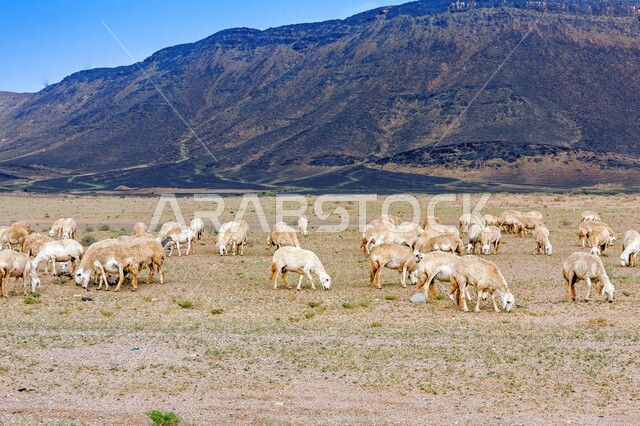
The Nawazir pastures in the Northern Borders region of Saudi Arabia are witnessing a remarkable flourishing of vegetation, making them a favored destination for livestock farmers. This environmental improvement reflects ongoing efforts to preserve biodiversity in the area and enhances the livelihood opportunities for livestock farmers who rely on these pastures to feed their animals.
The Northern Borders region is considered one of the vital areas in the Kingdom, enjoying a suitable climate for the growth of various plant species. The heavy rains that the region has experienced in recent months have contributed to the enhancement of vegetation growth, leading to an increase in the abundance of grasses and plants that are essential food sources for livestock.
Details of the Event
Reports indicate that livestock farmers in the Nawazir area have noticed a significant improvement in the quality of the pastures, with grasses becoming denser and more vibrant. This has attracted more farmers to the region, reflecting the importance of these pastures in supporting the local economy.
The Saudi government is also striving to enhance the agricultural and environmental sector by implementing programs aimed at improving pasture quality and increasing green spaces. These efforts align with the Kingdom's Vision 2030, which focuses on sustainable development and environmental preservation.
Background & Context
Historically, the Northern Borders region has suffered from a lack of vegetation due to harsh climatic conditions and drought. However, recent climate changes, including increased rainfall rates, have contributed to improving environmental conditions in the area. This improvement has not been limited to Nawazir alone but has included other areas in the Northern Borders.
Natural pastures are an essential part of the agricultural culture in Saudi Arabia, where many families rely on livestock farming as a primary source of income. Therefore, any improvement in pasture quality has a direct impact on the lives of these farmers.
Impact & Consequences
The improvement of vegetation in the Nawazir pastures has positive implications for the local economy, as it enhances livestock productivity and increases farmers' income. Furthermore, the increase in vegetation contributes to improving air quality and mitigating the effects of climate change.
Additionally, these environmental improvements may attract new investments in the agricultural sector, contributing to economic development in the region. The increased awareness of the importance of environmental preservation may lead to greater efforts to maintain biodiversity.
Regional Significance
The Nawazir experience serves as a model for the Arab region, where many countries face similar challenges in environmental conservation and natural resource management. This experience can inspire other countries seeking to improve their environmental conditions and promote sustainable agriculture.
Moreover, improving pastures in Saudi Arabia can contribute to enhancing food security in the region, making it less reliant on food imports. This underscores the importance of sustainability in agriculture and its impact on regional food security.
In conclusion, the flourishing vegetation in the Nawazir pastures represents a positive step towards achieving sustainable development in the Kingdom and reflects the government's commitment to improving environmental and economic conditions in the region.