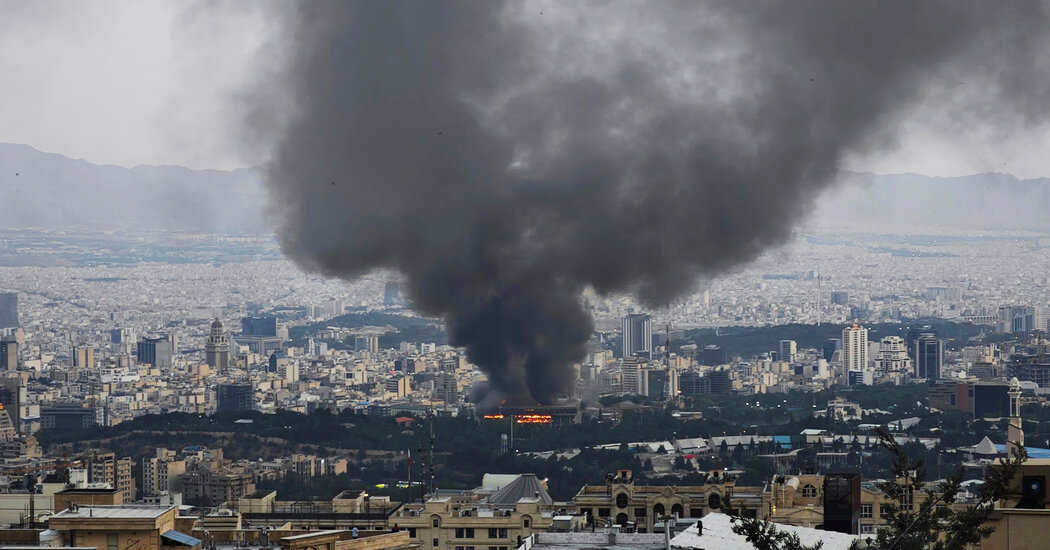
The ongoing conflict between the United States and Israel on one side, and Iran on the other, exhibits new characteristics that fundamentally differentiate it from previous conventional disputes. This war is not merely a traditional military conflict; it is a multi-dimensional hybrid war encompassing land, sea, air, as well as psychological warfare and the use of satellites.
Military expert Brigadier Elias Hanna describes this war as an advanced experiment in the use of modern weaponry, where artificial intelligence is integrated to expedite military decision-making. He notes that this conflict relies on advanced weapons such as missiles, aircraft, and artillery, alongside reconnaissance operations and intelligent data analysis, which alters the nature of traditional warfare.
Event Details
The United States employs precision missiles of the ATACMS type with a range of 300 kilometers, but the stock is limited due to extensive usage. Consequently, Washington has developed the Prism system in collaboration with Lockheed Martin, featuring missiles with a range exceeding 500 kilometers and achieving higher accuracy with production rates up to four times that of the previous stock, at a cost ranging from $1.6 million to $3.5 million per missile.
In contrast, Israel continues to carry out airstrikes while utilizing multiple defense systems such as the Iron Dome, David's Sling, and Arrow, having received American reinforcements including 8,000 tons of bombs and smart munitions. Meanwhile, Iran relies on an asymmetric strategy involving ballistic and cluster missiles, mobile launch platforms, fortified storage, and cheap, dense drones to confuse air defenses.
Background & Context
This war presents significant challenges in logistics and costs, as military operations affect 18 countries continuously for a month, leading to massive consumption of military inventory. The United States has had to increase production of Prism, THAAD, and Patriot missiles, noting its reliance on rare materials necessary for manufacturing these weapons, of which China controls 90%.
The modern war is characterized by asymmetry, where a simple drone like the Sting, costing $2,000, can destroy a missile worth $20,000. This shift makes the conflict depend on tactical intelligence rather than merely the volume of inventory.
Impact & Consequences
The recent Iranian attack on Beersheba demonstrated the effectiveness of Iranian missiles and drones in bypassing Israeli defense systems, prompting Tel Aviv to adopt a policy of distribution and rationalization of conventional air defenses. Time has become a critical factor, as the design, testing, and modification processes for each weapon are accelerating in real-time, thereby reducing the decision-making cycle.
This new model of warfare highlights the importance of innovation in weaponry, inventory management, and logistics as key factors for resilience and sustainability in the long term. Since February 28, the United States and Israel have launched attacks on Iran, resulting in hundreds of casualties, including prominent figures such as Supreme Leader Ali Khamenei and Secretary of the Supreme National Security Council Ali Larijani.
Regional Significance
This war directly impacts the situation in the Arab region, where tensions are escalating between regional and international powers. The use of modern technology in conflicts reflects a shift in war strategies, necessitating Arab countries to reassess their military and technological capabilities.
In conclusion, the current war emerges as an economic, technological, and strategic conflict rather than just a traditional dispute, prompting the involved nations to consider how to address these new challenges.