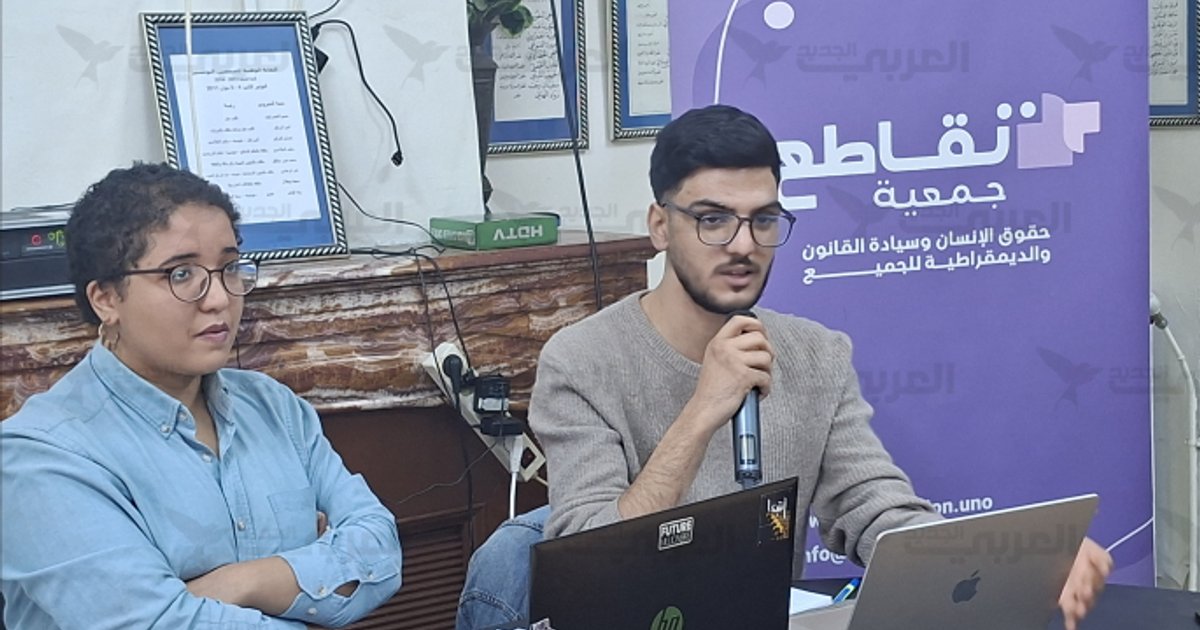
The organization 'Intersection' for rights and freedoms in Tunisia warned today of the increasing cases of violations affecting civil and political work in the country since July 25, 2021. The organization issued a statement confirming that these violations pose a serious threat to fundamental rights and public freedoms.
These warnings come at a time when Tunisia is suffering from escalating political and economic crises, complicating the overall situation. The statement pointed out that many political and civil activists have been subjected to arrest and prosecution, reflecting a deterioration in the human rights environment in the country.
Details of the Situation
Since July 25, 2021, the date on which Tunisian President Kais Saied took exceptional measures, including freezing the parliament and dismissing the government, Tunisia has witnessed a notable decline in public freedoms. The organization 'Intersection' has documented numerous cases where activists and journalists have been targeted, reflecting an increase in repression against dissenting voices.
The statement also indicated that the current government has taken steps to shrink the space for civil work, as many non-governmental organizations have been closed, negatively impacting the ability of civil society to operate freely. The organization warned that these policies could exacerbate the social and economic conditions in the country.
Background & Context
Tunisia's modern history is filled with challenges, having experienced a revolution in 2011 that led to the ousting of the regime of Zine El Abidine Ben Ali. Despite the great hopes that accompanied that revolution, subsequent years have seen repeated political conflicts and economic crises. With the rise of popular protests, Kais Saied's measures have increased polarization within Tunisian society.
Tunisia is considered one of the countries that underwent a democratic transition, but the current situation raises concerns about the future of this transition. With the increase in violations, civil society faces significant challenges in preserving its gains.
Impact & Consequences
The repercussions of the violations in Tunisia extend beyond the country's borders, affecting regional stability. As repression increases, so too may distrust in government institutions, leading to worsening social and economic crises. Additionally, these violations could impact Tunisia's international relations, as it may face pressure from the international community to improve its human rights situation.
Furthermore, the deterioration of the human rights situation could lead to an increase in illegal migration from Tunisia to Europe, as many young people seek to escape difficult conditions. This could place further pressure on European countries, which are already grappling with a migration crisis.
Regional Significance
Tunisia serves as a model for many Arab countries striving for democracy. However, the increase in violations in Tunisia could have a negative impact on change movements in the region. Activists in other countries may feel that the challenges they face are greater than they had imagined, potentially leading to a decline in democratic movements.
The situation in Tunisia also highlights the importance of supporting civil society in Arab countries, as maintaining fundamental freedoms is vital for achieving stability and development.
In conclusion, Tunisia stands at a crossroads, where the current situation requires an urgent response from both the international and local communities to protect rights and freedoms. The continuation of violations could exacerbate crises and threaten the future of democracy in the country.