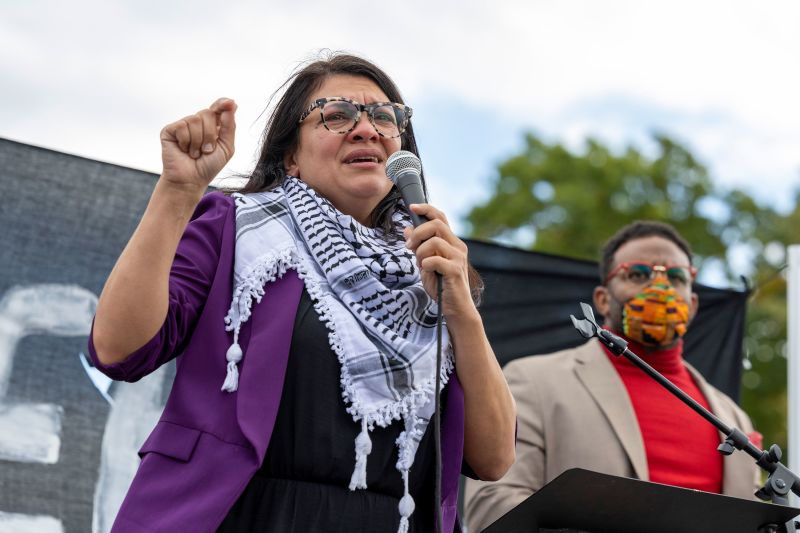
U.S. Congresswoman Rashida Tlaib has introduced two bills in the U.S. House of Representatives aimed at halting American support for the Israeli military operation in Lebanon. This initiative comes at a time when Lebanon is experiencing continuous Israeli military escalation, which began after Hezbollah's response to a joint U.S.-Israeli attack targeting Iran at the end of February.
Tlaib seeks through this legislation to strengthen the U.S. position in supporting Palestinian rights and to stop the increasing Israeli violations. She has emphasized that U.S. support for Israel should cease unless human rights and international law are respected.
Details of the Legislation
The bills introduced by Tlaib include a provision that suspends U.S. military aid to Israel until tangible steps are taken towards achieving a just peace. These bills have been presented at a sensitive time, as concerns grow over escalating conflict in the region and its impact on regional stability.
It is noteworthy that Tlaib is not alone in this endeavor, as several Democratic lawmakers have joined her in expressing their concerns over Israel's actions in Lebanon and Palestine. Some have pointed out that U.S. support should be conditional upon Israel's adherence to international laws.
Background & Context
Historically, the United States has provided significant support to Israel, viewing it as a strategic ally in the Middle East. However, the rise in Israeli violations against Palestinians, especially in light of recent events, has sparked widespread debate within the United States regarding the nature of this support.
In recent years, U.S.-Israeli relations have experienced some tensions, particularly with the growing voices calling for an end to unconditional support for Israel. Recent events in Lebanon have amplified these voices, making it essential to reconsider U.S. support policy.
Impact & Consequences
If the bills introduced by Tlaib are passed, they could lead to a radical change in U.S. policy towards Israel. This change could significantly affect U.S.-Israeli relations and may lead to a reevaluation of military and economic aid provided to Israel.
Moreover, this move could encourage more American lawmakers to take similar stances, potentially opening the door for further discussions on Palestinian rights and the necessity of achieving peace in the region. If these bills succeed, they could contribute to changing the political dynamics in the Middle East.
Regional Significance
This step is significant not only for the United States and Israel but also for the entire Arab region. Halting U.S. support for Israel could help strengthen the position of Palestinians and give them a renewed impetus in their quest for legitimate rights.
This shift may also impact relations between Arab countries and the United States, as some nations may find themselves compelled to reassess their relationships with Washington in light of these changes. Ultimately, these developments could reshape the political landscape in the region.