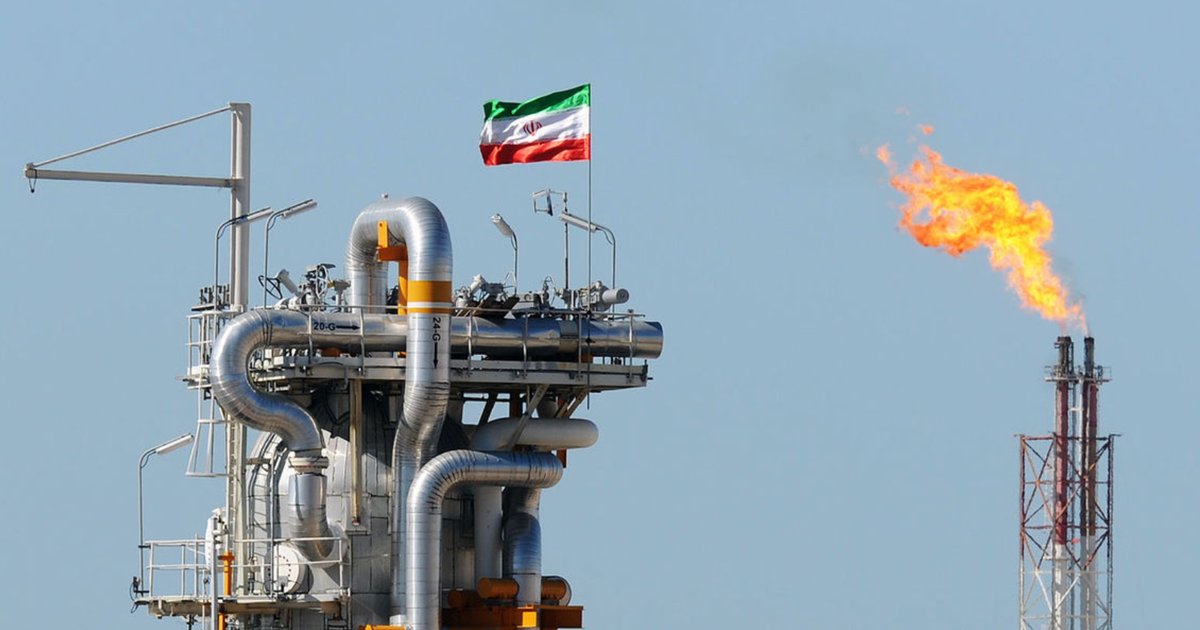
Iran has lowered the prices of its crude oil directed at Chinese buyers, seeking to attract the interest of independent refineries that have seen a decline in operational rates due to losses from shrinking profit margins.
According to market traders, Iranian Light crude for July delivery was offered at a discount of more than $1 per barrel compared to the benchmark Brent crude price on the Intercontinental Exchange. Last month, this crude had seen a price premium, reflecting the rapid changes in the market.
Details of the Situation
Independent Chinese refineries, known as "teapot refineries," are among the largest buyers of Iranian oil. However, these refineries are facing increasing economic pressures as their slim profit margins have turned into larger losses. Beijing has issued directives for refineries to continue fuel production at any cost, but it seems to be moving towards easing these directives due to the worsening losses of these refineries.
Iranian oil flows to China dropped to 1.1 million barrels per day in May, the lowest level since January 2025, according to data from Kepler. The data also indicates that there are about 56 million barrels of Iranian oil aboard tankers that are currently idle around the world, with more than 60% of them concentrated in the Singapore Strait and off the Chinese coast.
Background & Context
Independent Chinese refineries typically account for about 90% of Iranian oil sales. However, the United States has intensified its sanctions on this trade in an effort to push Tehran towards a peace agreement. The "Hengli Petrochemical (Dalian) Refinery," one of the largest independent refineries in China, was the latest entity targeted by Washington's sanctions.
In a related context, traders, who requested anonymity, noted that the price premium for Russian ESPO crude has decreased to $3 above Brent crude, compared to $6 last month, due to reduced interest from independent Chinese refineries in purchasing.
Impact & Consequences
The reduction in Iranian oil prices appears to be part of Tehran's strategy to cope with increasing economic pressures. This trend may affect trade relations between Iran and China, as Iran seeks to boost its sales amid U.S. sanctions.
Additionally, the decline in Iranian oil flows to China could lead to negative impacts on the Iranian economy, which heavily relies on oil revenues. At the same time, Chinese refineries may face additional challenges as profit margins continue to shrink.
Regional Significance
These developments are of significant importance to the Arab region, as they reflect changes in the global oil market and their impact on regional economies. Such changes may lead to a reassessment of strategies by Arab oil-producing countries in light of increasing competition.
In conclusion, this situation highlights the need to monitor developments in the oil market and their effects on economic and political relations in the region.