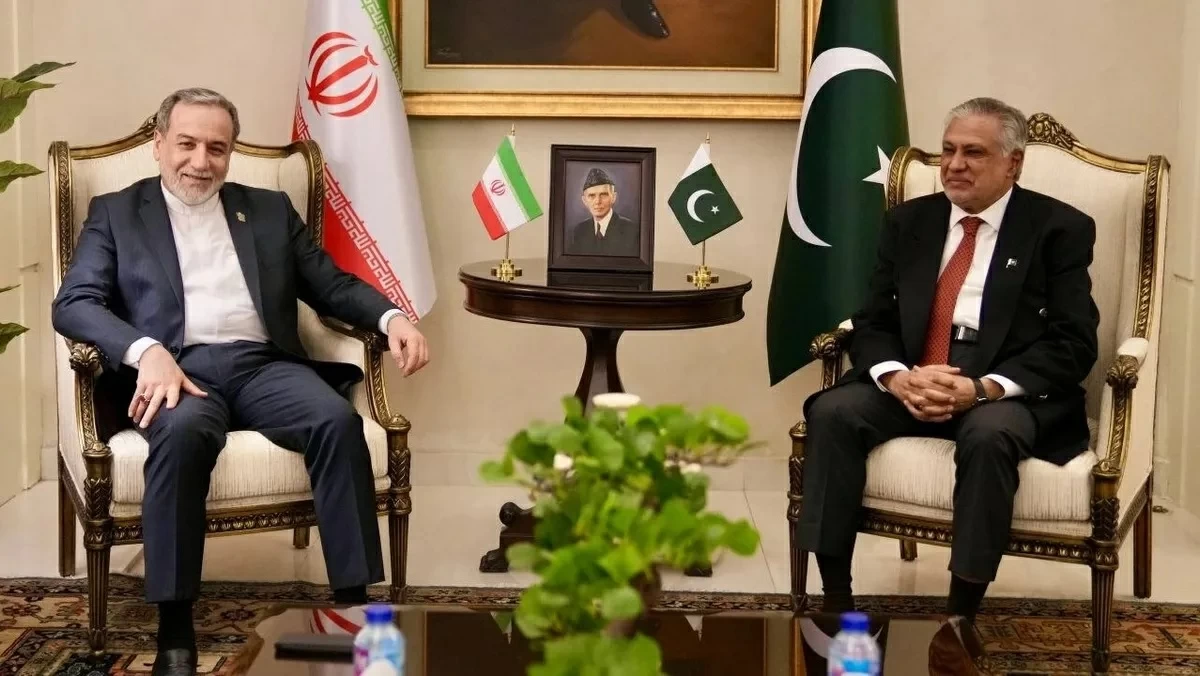
Iranian Foreign Minister Abbas Araghchi left the Pakistani capital Islamabad today (Saturday) heading to Muscat, following a series of intensive talks lasting around 20 hours with senior Pakistani officials, including Prime Minister Shehbaz Sharif and Army Chief General Asim Munir. These negotiations come at a sensitive time, with ambiguity surrounding their outcomes.
The Pakistani government has remained silent regarding whether Tehran has agreed to a second round of talks, but sources confirmed that Araghchi may return to Islamabad tomorrow (Sunday) or the day after (Monday). Meanwhile, the Iranian Foreign Ministry issued a statement after the talks but did not provide clear details, merely thanking Pakistan for its role as a mediator.
Details of the Event
The Iranian news agency IRNA reported that Araghchi left Islamabad after meeting with Pakistani officials, where bilateral relations and regional developments were discussed. Two Pakistani government sources confirmed to Reuters the departure of the Iranian delegation.
Earlier, Prime Minister Shehbaz Sharif met with Araghchi and his accompanying delegation, where he was briefed on Tehran's stance regarding negotiations with the United States. The American delegation, led by envoys Steve Biegun and Jared Kushner, is expected to arrive in Islamabad tonight for talks with Pakistani officials, although sources confirmed they have not yet departed Washington.
Background & Context
These negotiations are part of Iranian-American efforts to reach an agreement on outstanding issues amid rising tensions in the region. French President Emmanuel Macron highlighted the importance of reopening the Strait of Hormuz, a vital artery for global energy trade, amid warnings of a potential energy shortage if current conditions persist.
Through these negotiations, Iran aims to improve its relations with the United States, while Pakistan seeks to play a mediating role in this process, reflecting its strategic importance in the region.
Impact & Consequences
If the negotiations succeed in making progress, it could lead to a de-escalation of tensions in the region, positively impacting global markets. Conversely, if the negotiations continue to stall, it may exacerbate regional crises and increase economic pressures on the involved countries.
These talks also serve as a test of Pakistan's ability to play an effective mediating role in regional issues, which could enhance its political standing on the international stage.
Regional Significance
The outcomes of these negotiations directly affect the situation in the Arab region, where Iran is a key player in many regional crises. Any progress in the talks could contribute to stabilizing conditions in countries like Iraq, Syria, and Lebanon.
In conclusion, attention remains focused on the potential return of Araghchi to Islamabad and what the negotiations may yield in terms of results that could reshape regional and international relations.