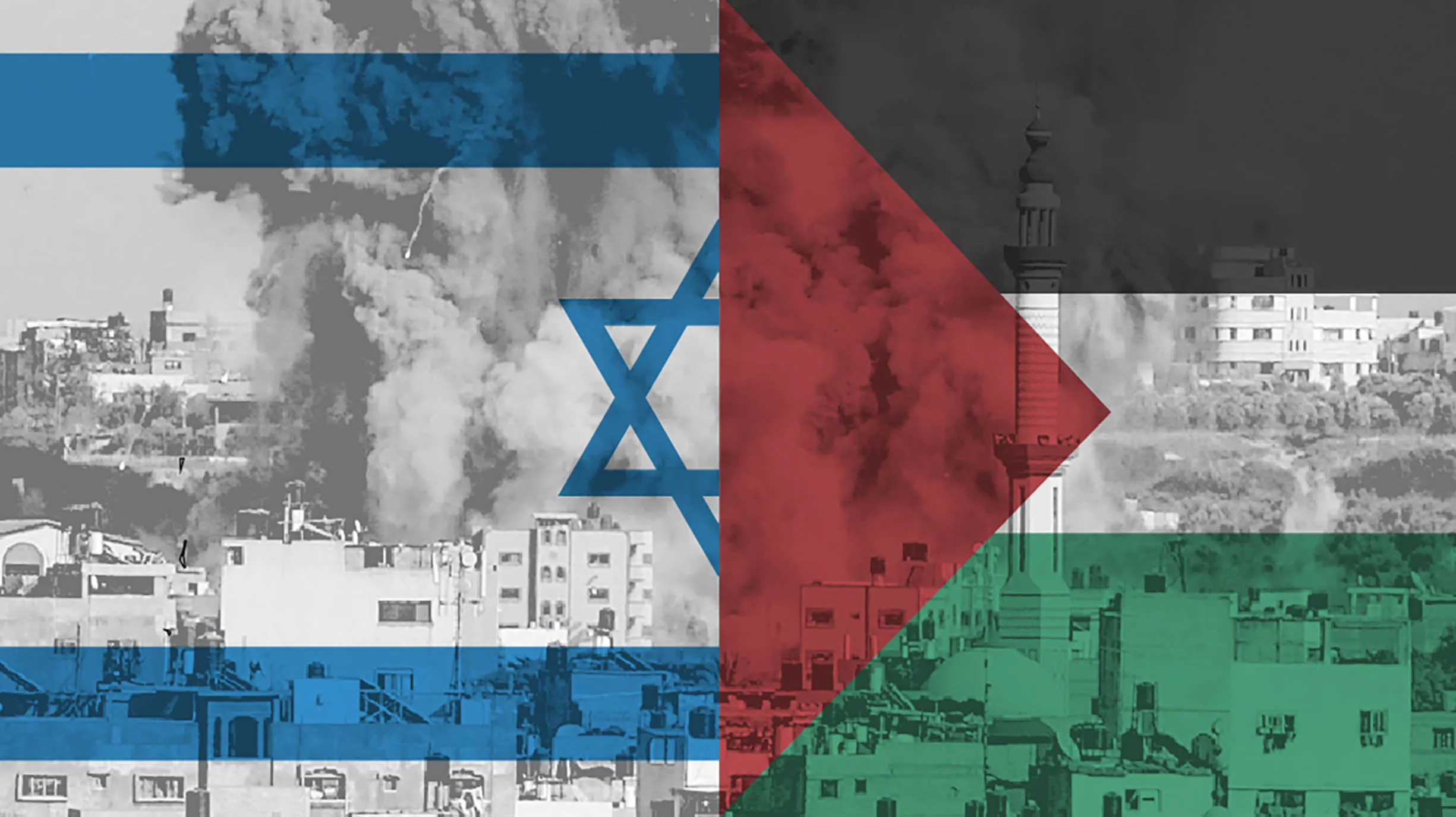
As the world's gaze is fixed on the exchanged missiles in the skies of the Middle East and the repercussions of the ongoing Israeli-American war on Iran, the far-right government in Tel Aviv is exploiting this situation to implement its most extreme agenda in the Palestinian territories.
Under the guise of international distraction, Israel is executing a "composite attack" targeting prisoners and Islamic and Christian holy sites, while unleashing settlers to swallow the West Bank. This is a clear attempt to impose new demographic and geographic realities that are difficult to reverse.
Details of the Event
In an unprecedented move, the Israeli Knesset has finally approved a law imposing the death penalty on Palestinian prisoners, which human rights organizations have deemed a consolidation of an apartheid system that exclusively targets Palestinians. This law, drafted by the extremist minister Itamar Ben Gvir, not only legitimizes killing but also enshrines an "apartheid" system, as it applies only to Palestinians under the pretext of "denying the existence of the State of Israel," while exempting any Israeli who kills a Palestinian.
Under the pretext of a "state of emergency" related to the war on Iran, the occupying police completely closed Al-Aqsa Mosque to worshippers for over a month, depriving them of commemorating the last ten days of Ramadan and the Eid al-Fitr prayer. This closure does not appear to be merely a temporary security measure but rather a practical test to change the existing historical and legal status.
Context and Background
Experts in international law consider this path a blatant violation of the status quo, paving the way for an attempt to impose a temporal and spatial division at Al-Aqsa. Moreover, the restrictions have not been limited to Muslims but have extended to Christian holy sites, where the occupying police prevented the Latin Patriarch of Jerusalem, Cardinal Pierbattista Pizzaballa, from entering the Church of the Holy Sepulchre to hold the "Palm Sunday" mass, leading to the cancellation of gatherings and the historic procession.
This action has been regarded by religious authorities as a blatant disregard for the feelings of millions of Christians and a direct violation of freedom of worship. The incident has sparked widespread international political reactions, with Israeli Prime Minister Benjamin Netanyahu announcing that he has instructed to grant the patriarch full and immediate access to the Church of the Holy Sepulchre.
Consequences and Impact
The occupied West Bank has turned into a lawless arena for armed settler groups, who operate under the protection of the Israeli occupying army. Israel continues its policy of assassinations and encroachments in the Gaza Strip, amidst a state of starvation that has worsened since the outbreak of the war on Iran, bringing famine back to the region.
According to statistics released by governmental sources in Gaza, the occupying forces allowed only 1,190 fuel trucks to enter out of 8,050 trucks that were supposed to enter during 161 days since the ceasefire agreement came into effect, which explains the significant shortage of fuel and gas in the sector.
Impact on the Arab Region
Israel is fully aware that redirecting global attention towards the Gulf and Iran provides it with the ideal "blind spot" for unprecedented escalation in the Palestinian territories. With the legalization of executions, the Judaization of holy sites, the expansion of settlements, and the starvation of Gaza, the occupying government seems determined to exploit this war to the fullest, benefiting from the international and regional silence that practically translates into a green light to continue its bloodiest and most extreme policies.
In conclusion, what is happening in Palestine reflects significant challenges facing the Palestinian cause under the current circumstances, necessitating urgent international action to protect the rights of Palestinians and halt the escalating violations.