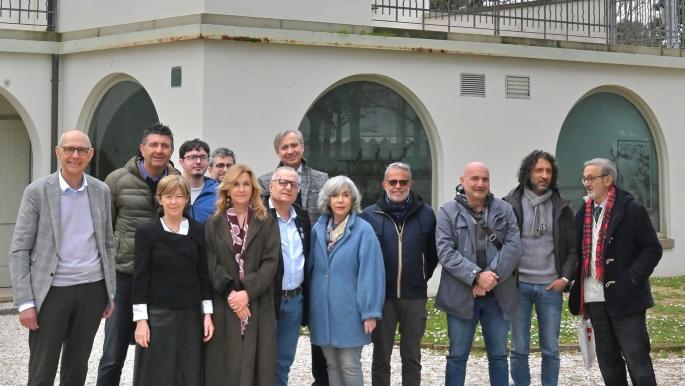
The municipality of Riccione, situated on the Adriatic coast close to Rimini, has taken a bold step by purchasing a historic villa that belonged to Italian fascist leader Benito Mussolini (1883 – 1945). This action is part of local authorities' efforts to confront any attempts to revive fascism or promote extremist ideas within society.
This villa is a historical symbol that carries deep significance related to Italy's dark period, serving as a center for numerous political and social activities during Mussolini's rule. The move has sparked mixed reactions in political and social circles, with some viewing it as a positive step towards confronting fascism, while others believe it could ignite controversy surrounding the country's history.
Details of the Purchase
The acquisition was made as part of a broader project aimed at enhancing historical awareness and combating extremism. During a press conference, the mayor of Riccione announced that this decision comes at a sensitive time, as far-right movements have increased in Europe, including Italy, in recent years. He emphasized that the villa will be transformed into a cultural center aimed at promoting values of tolerance and democracy.
This initiative is part of wider efforts in Italy to confront fascism, with similar measures being taken in other regions of the country. Officials hope that these initiatives will contribute to raising historical awareness among new generations.
Background & Context
The history of fascism in Italy dates back to the early 20th century when Mussolini led the country into a dictatorial regime that lasted until the end of World War II. After the fall of the fascist regime, Italy underwent radical transformations in its politics; however, fascist ideas have not completely disappeared, as there are still small groups advocating for the revival of those ideologies.
In recent years, Italy has witnessed a rise in the popularity of far-right parties, raising concerns about the resurgence of fascist ideas. Therefore, the Riccione municipality's step is considered part of a broader strategy to address this phenomenon.
Impact & Consequences
This move serves as a strong message from the Italian authorities that fascism is not acceptable in modern society. It also reflects the government's commitment to combating extremism and promoting democratic values and human rights.
This initiative is expected to influence public discussions regarding fascism in Italy and may encourage other municipalities to take similar actions. It could also contribute to enhancing historical awareness among youth and teaching them lessons from the past.
Regional Significance
Although this event is taking place in Italy, it carries important implications for the Arab region. History indicates that fascism and extremist ideas can emerge anywhere, necessitating awareness and vigilance from communities.
The lessons learned from Italy's experience can be beneficial for Arab countries in combating extremism, as promoting values of tolerance and democracy is essential for building strong and stable societies.
In conclusion, the Riccione municipality's step represents a significant move towards confronting fascism and underscores the importance of historical awareness in building a better future.