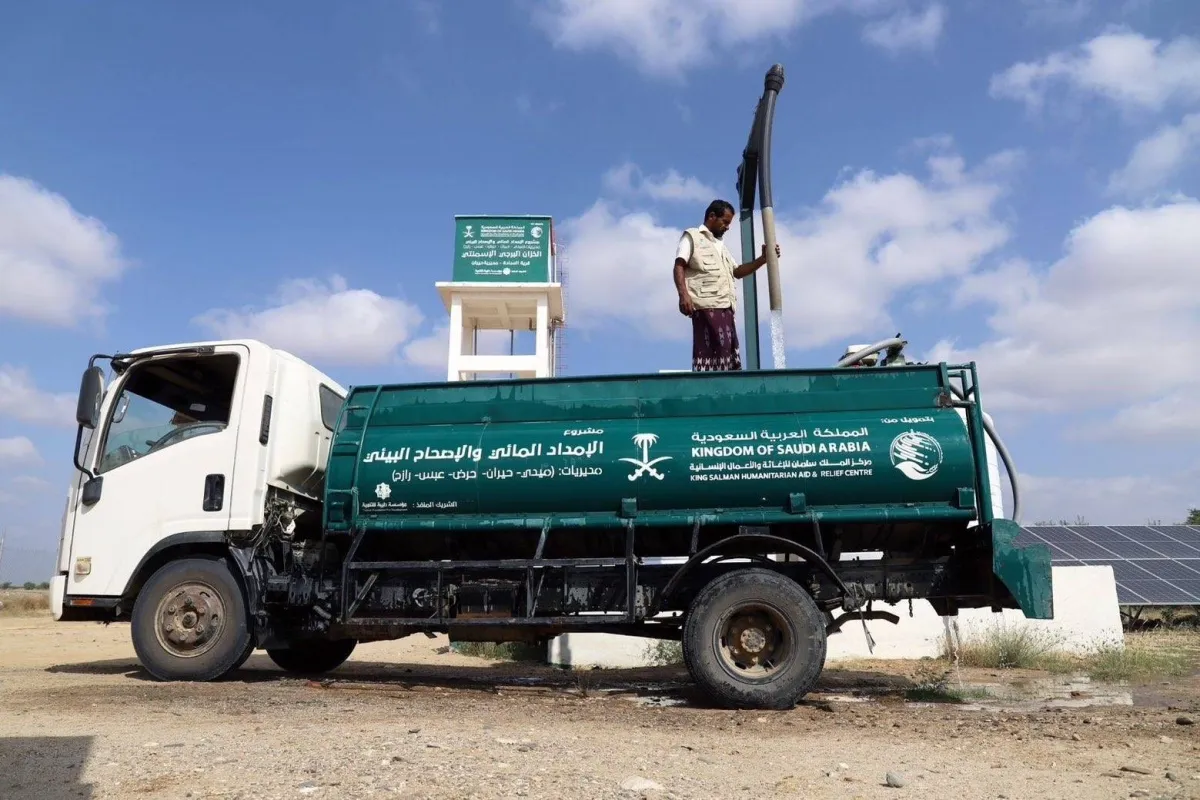
In a new step to enhance food security in Yemen, the King Salman Relief and Humanitarian Aid Center signed a cooperation agreement with a civil society organization to implement a project aimed at supporting farmers in the provinces of Hadramout and Socotra. The project, which was signed via video conference, is part of the "Seed" initiative and directly benefits 800 individuals and indirectly 6500 individuals.
The project includes the reclamation of agricultural lands, the establishment of greenhouses in arid areas, as well as the implementation of training programs in agricultural guidance, organic fertilizer production, and pest control. It also encompasses support for food processing industries based on agricultural products, revitalizing the role of agricultural cooperatives, and enhancing their organizational and productive capacities.
Event Details
The project aims to provide farmers with the necessary agricultural inputs and equipment, contributing to improving their production and increasing the income of rural families. This initiative is part of the humanitarian and relief efforts undertaken by the Kingdom of Saudi Arabia to support the agricultural sector in Yemen, as the center seeks to empower farmers and achieve sustainable agricultural development.
In a related context, the governor of Shabwa, Awad bin al-Wazir, laid the foundation stone for the first phase of the Kuwaiti housing project for orphans in the city of Ataq, funded by the Al-Kawthar Charity Foundation of Sheikh Mohammed Saleh Al-Khuna through the Kuwaiti Zakat House. The project, implemented by the Al-Sabeel Social Development Foundation, aims to provide a comprehensive residential and service environment for orphans and beneficiary families.
Background & Context
These projects come amid the difficult humanitarian conditions facing Yemen, where many residents suffer from food insecurity. The Kingdom of Saudi Arabia, through the King Salman Relief Center, aims to provide the necessary support to farmers, contributing to improving the standard of living in rural areas.
Historically, Hadramout and Socotra have been important agricultural regions in Yemen, but ongoing conflicts have negatively impacted agricultural production. Therefore, this initiative represents a positive step towards revitalizing and supporting the agricultural sector.
Impact & Consequences
The project is expected to contribute to improving food security in the targeted areas, helping to reduce reliance on external aid. Additionally, supporting agricultural cooperatives enhances the local community's ability to face economic challenges.
These initiatives are part of the broader efforts made by the Kingdom to support sustainable development in Yemen, reflecting its commitment to helping the Yemeni people overcome humanitarian crises.
Regional Significance
This project exemplifies humanitarian cooperation among Arab countries, reflecting the fraternal ties between the Kingdom of Saudi Arabia and Yemen. Furthermore, Kuwait's support for orphans in Shabwa underscores the commitment of Arab nations to enhance social stability in the region.
In conclusion, these initiatives highlight the importance of Arab cooperation in addressing humanitarian challenges and emphasize the roles of Saudi Arabia and Kuwait in supporting the most vulnerable groups.