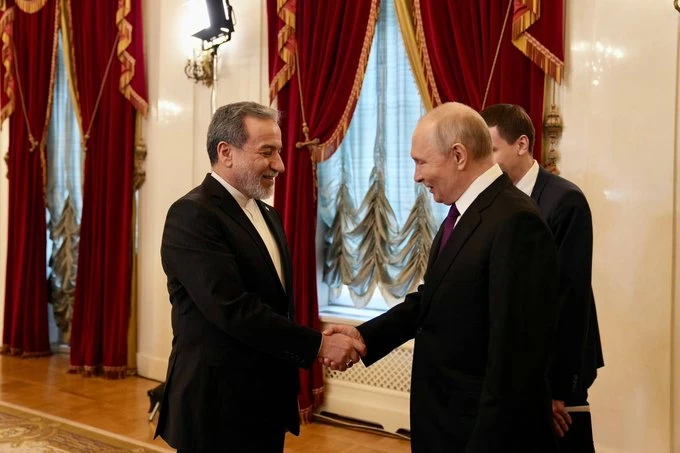
In a new step towards easing tensions in the Middle East, Moscow has announced its intention to propose mediation ideas between the United States and Iran. This announcement follows a meeting between Russian President Vladimir Putin and Iraqi Foreign Minister Abbas Araghchi in St. Petersburg, where Putin affirmed that his country would do everything possible to help end the conflict in the region.
Araghchi's visit is part of a foreign tour that included Oman and Pakistan, which plays a mediating role between Tehran and Washington. The United States and Iran held the first round of negotiations in Islamabad earlier in April, but efforts to resume talks have stalled, prompting Araghchi to visit Pakistan twice over the weekend.
Details of the Event
Russia is seeking to mediate to restore calm in the Middle East, especially following the recent war on Iran. A ceasefire has been in effect for about three weeks, reached after more than 40 days of conflict. Moscow has repeatedly proposed storing Iranian enriched uranium as a mechanism to ease tensions, but this proposal has been rejected by the United States.
The United States and Israel launched a war on Iran on February 28, leading to military responses from Iran against Israel and regional countries. On April 8, Washington and Tehran announced a temporary truce mediated by Pakistan, and on April 11, Pakistan hosted a round of talks between the two parties that did not result in an agreement.
Background & Context
Historically, relations between the United States and Iran have been strained since the 1979 Iranian Revolution, which led to the severance of diplomatic ties. As military tensions escalate, it has become essential to seek diplomatic solutions. Through its mediation, Russia aims to enhance its role as an influential power in the region, especially amid the decline of American influence.
These developments come at a sensitive time, as fears of escalating conflict in the Middle East are increasing, affecting the overall stability of the region. Recent events have shown that tensions between Iran and Israel could lead to greater military escalation, necessitating effective diplomatic interventions.
Impact & Consequences
If Russian mediation succeeds, it could lead to a reduction in tensions and achieve relative stability in the region. Furthermore, successful negotiations could open the door for improving relations between Iran and the United States, which may positively impact the Iranian economy and alleviate imposed sanctions.
On the other hand, Russia may face challenges in achieving this goal, especially given American skepticism regarding Iran's intentions. Additionally, the positions of other regional countries, such as Saudi Arabia and Israel, will significantly influence the course of negotiations.
Regional Significance
These developments are crucial for Arab countries, as the stability of the region heavily relies on the relations between Iran and the United States. If Russian mediation succeeds, it could lead to a decrease in military tensions in the region, positively reflecting on neighboring Arab countries.
In conclusion, hopes remain pinned on diplomatic efforts, as peace in the Middle East requires international cooperation and strong political will from all parties involved.