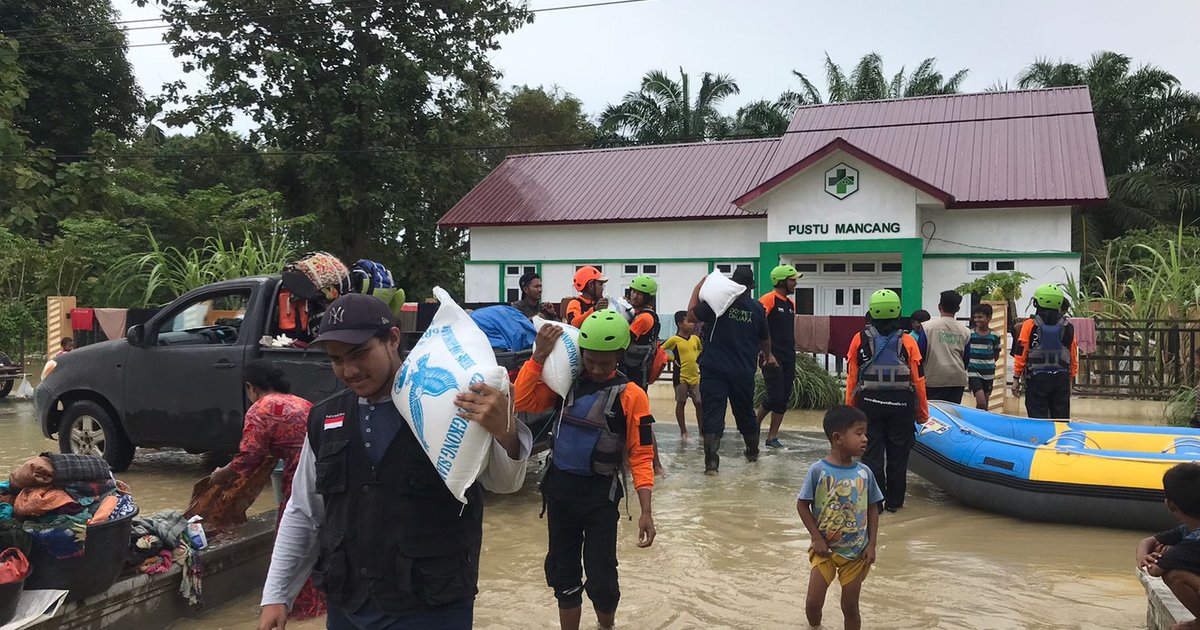
In the Lhokseumawe area of North Aceh, Indonesia, residents have resorted to using rubber boats to navigate flooded rivers after heavy rains caused road closures. This situation highlights the significant challenges faced by the community amid harsh weather conditions.
The heavy rainfall has led to rising water levels in the rivers, inundating roads and preventing residents from accessing their homes. In these circumstances, locals have turned to rubber boats as an alternative means of transportation, crossing the river in a scene that reflects the spirit of cooperation and resilience in the face of natural disasters.
Event Details
Images captured from the scene show a group of residents using rubber boats to cross the river, illustrating the daily challenges faced by those living in flood-affected areas. Some residents noted that this is not the first time they have encountered such conditions, as they are accustomed to flooding during the rainy season.
Flooding is a recurring issue in Indonesia, where heavy rains cause river water levels to rise, leading to land and road inundation. Reports indicate that recent floods have resulted in the destruction of some homes and farms, exacerbating the suffering of the local population.
Background & Context
Historically, Indonesia has experienced numerous natural disasters, including earthquakes and floods. The country is located in the Pacific Ring of Fire, making it susceptible to seismic activity and volcanic eruptions. However, flooding is considered one of the most common disasters, affecting millions of residents annually.
In recent years, the intensity of flooding has increased due to climate change, resulting in heavier rainfall and altered weather patterns. Studies have shown that climate change can exacerbate flooding, making it essential to take action to adapt to these changes.
Impact & Consequences
Flooding significantly impacts the lives of residents, leading to the destruction of homes and farms, which increases the suffering of families. Additionally, flooding affects infrastructure, making it difficult for residents to access essential services such as education and healthcare.
Moreover, floods can lead to the outbreak of diseases, as stagnant water creates a suitable environment for the breeding of mosquitoes and insects. This increases the risk of waterborne diseases, posing a threat to public health.
Regional Significance
Although flooding in Indonesia may seem distant from the Arab region, the climate change that leads to such disasters affects the entire globe. Many Arab countries are also experiencing climate changes that result in increased droughts and floods, necessitating urgent action to adapt to these changes.
Understanding the challenges faced by other countries can help Arab nations develop effective strategies to deal with natural disasters. Additionally, international cooperation in disaster management can have a positive impact on all affected countries.