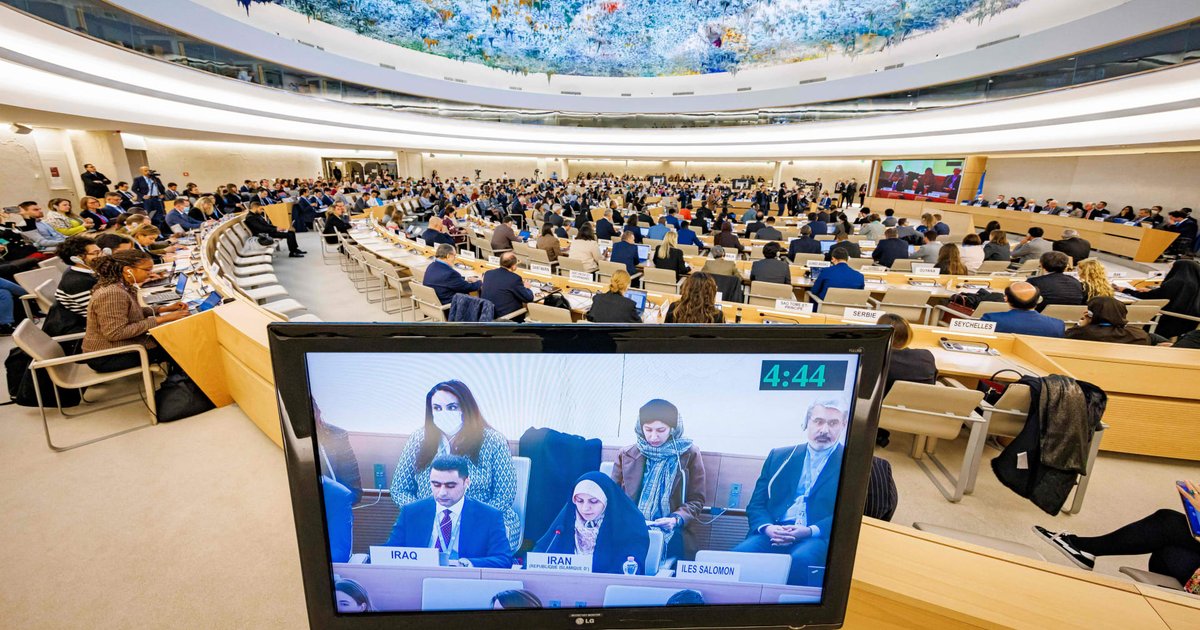
The UN Human Rights Council will hold a session on Wednesday to discuss the recent military aggression launched by Iran against Bahrain, Jordan, Kuwait, Oman, Qatar, Saudi Arabia, and the UAE. This session comes in the wake of a series of attacks targeting Gulf states, raising major concerns about the stability of the region.
The session will address recent developments in the region, where Gulf countries have experienced repeated attacks from Iran. These attacks have cast a shadow over the relations between Gulf states and Iran, significantly impacting political and economic stability in the area.
Details of the Attacks
The attacks carried out by Iran against Gulf states occurred amid escalating tensions between Iran and these countries. These assaults targeted vital installations in Bahrain, Jordan, Kuwait, Oman, Qatar, Saudi Arabia, and the UAE, resulting in both material and human losses.
The Human Rights Council will discuss these attacks in the context of human rights, raising concerns about the protection of human rights in the region. The session will focus on the role of the Human Rights Council in safeguarding human rights amid conflicts and attacks that threaten regional stability.
Background & Context
The historical context of these attacks traces back to the tensions between Iran and Gulf states. These tensions have centered around political and economic issues, including disputes over maritime borders and competition for influence in the region.
The regional backdrop of these attacks indicates that the area is witnessing increasing tensions between Iran and Gulf states. These tensions threaten regional stability and affect the relationships between Gulf countries and Iran.
Impact & Consequences
The attacks launched by Iran against Gulf states have significant implications for regional stability. These assaults affect the relations between Gulf states and Iran, exacerbating tensions in the area.
The economic impact of these attacks is evident in the material losses sustained by Gulf countries. These losses affect local economies and increase the costs borne by Gulf states.
Regional Significance
The attacks carried out by Iran on Gulf states have ramifications for the broader Arab region. These assaults heighten tensions in the area and influence the relationships between Gulf countries and Iran.
In conclusion, the session held by the Human Rights Council regarding Iran's attacks on Gulf states occurs against a backdrop of escalating tensions in the region. This session will emphasize the role of the Human Rights Council in protecting human rights amid conflicts and attacks that threaten regional stability.