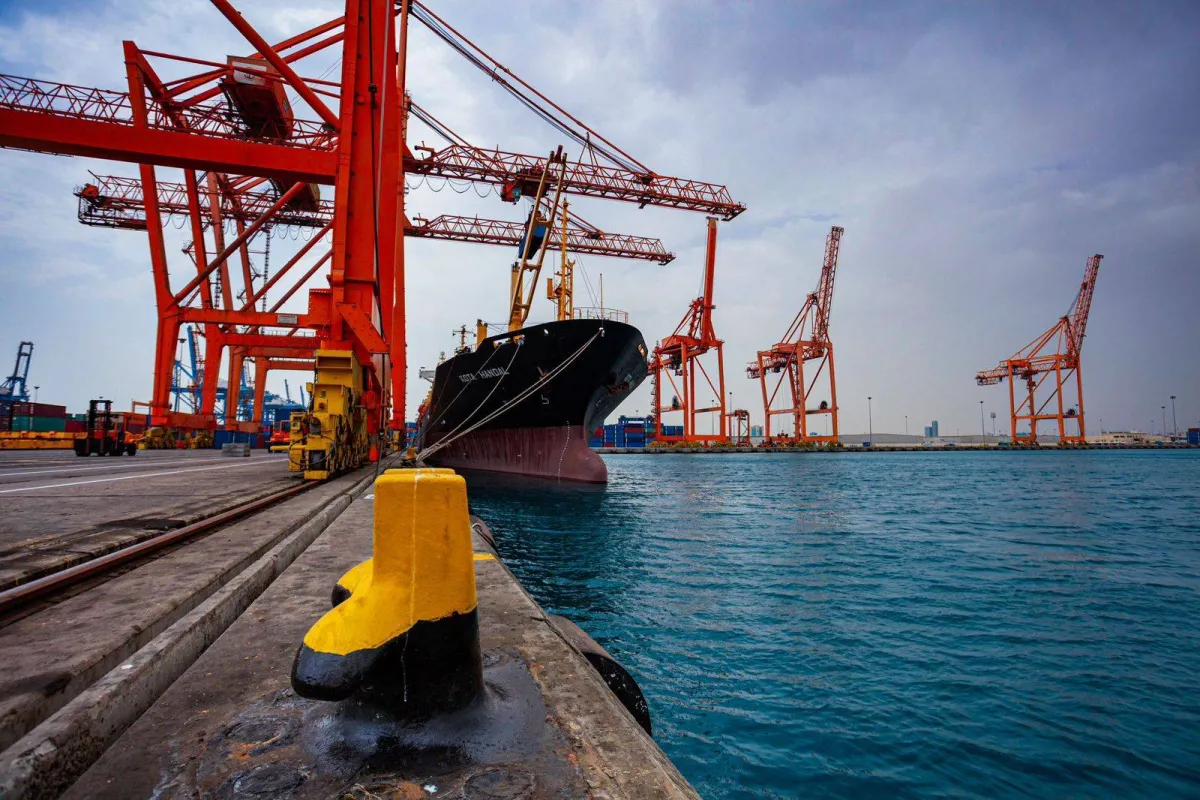
The Saudi Ports Authority (Mawani) has announced the expansion of operations by "Pacific International Lines" at Jeddah Islamic Port, with the launch of two shipping services: "RGS" and "RST". This move reflects the continuous growth of the port's role as a major logistics hub on the Red Sea and enhances navigational connectivity with regional and global markets.
The first service, "RGS", aims to connect Jeddah Port with four ports, including Nhava Sheva and Mundra in India, as well as Djibouti and Berbera in Somalia, with a capacity of up to 1,810 standard containers. Meanwhile, the "RST" service expands connectivity to include nine global ports, including major ports in China and Singapore, along with regional ports such as Sokhna in Egypt and Aqaba in Jordan, with a capacity of 11,923 standard containers.
Event Details
This expansion is part of ongoing efforts to enhance operational performance and improve Saudi Arabia's ranking in global logistics service indicators. It also supports the growth of national exports and expands the maritime connectivity network. Jeddah Islamic Port is considered one of the largest ports in the region, featuring 62 multi-purpose berths, along with integrated logistics areas and specialized container handling terminals, with a capacity of up to 130 million tons annually.
This expansion reflects the port's ability to handle the anticipated increase in trade volumes and strengthens its strategic position in global trade.
Background & Context
Historically, Jeddah Islamic Port has played a vital role in maritime trade, serving as a meeting point between East and West. With the rise of global trade, it has become essential to enhance port efficiency to meet growing demand. In recent years, Saudi Arabia has made significant efforts to develop its logistics infrastructure in line with Vision 2030, which aims to diversify the economy and enhance the Kingdom's position as a global logistics hub.
This step comes at a time when the region is witnessing significant transformations in trade and transport, reflecting the importance of Jeddah Port as a strategic center in these changes.
Impact & Consequences
This expansion is expected to enhance trade flows between Saudi Arabia and other countries, contributing to an increase in national exports. It also reflects the Kingdom's ability to attract foreign investments in the transport and shipping sector, thereby enhancing its economic standing in the region.
Moreover, improving port efficiency will help reduce shipping and transport costs, benefiting both companies and consumers alike. This expansion also enhances Saudi Arabia's capacity to tackle global economic challenges.
Regional Significance
Jeddah Islamic Port is one of the main ports in the Arab world, and this expansion underscores the importance of cooperation among Arab countries in the field of transport and shipping. By enhancing maritime connectivity, Arab nations can achieve significant economic benefits, contributing to greater Arab economic integration.
In light of the economic challenges facing many Arab countries, improving port efficiency and expanding shipping services can have a positive impact on economic growth and stability in the region.
In conclusion, the launch of these two services represents an important step towards enhancing Jeddah Islamic Port's status as a major logistics hub, contributing to supporting the Saudi economy and strengthening its role in global trade.